Have you ever walked into a business office and felt completely lost? Maybe the lobby walls were completely blank, or the signs were too small and hard to read. You probably spent several minutes wondering if you were even in the right building. That feeling of confusion is more common than you think, and it is a major problem for business owners. When a visitor, client, or job candidate walks through your front door, your lobby does the talking before you ever say a single word. If your reception space is confusing or cold, you might lose their trust before you even shake hands.
In this guide, we will show you how to transform your office lobby with the right signage. You will learn about the different types of lobby signs, how to choose the best materials, where to place them, and how to follow legal safety rules like ADA compliance. Our goal is to help you build an intuitive, professional, and welcoming space that reflects your brand and puts your visitors at ease. By planning your signs as a complete system rather than a last-minute addition, you can save money, avoid costly design errors, and make a fantastic first impression every single day.
“Your lobby is the first physical handshake your business makes with the world. Getting your signs right is not just a decorating choice—it is a primary business strategy.”
A well-planned lobby design uses interior signs as tools to tell your company’s story. It is not just about hanging a banner on the wall. It is about creating a sense of arrival. Let’s dive deep into how physical signs affect your space, your customers, and your team.
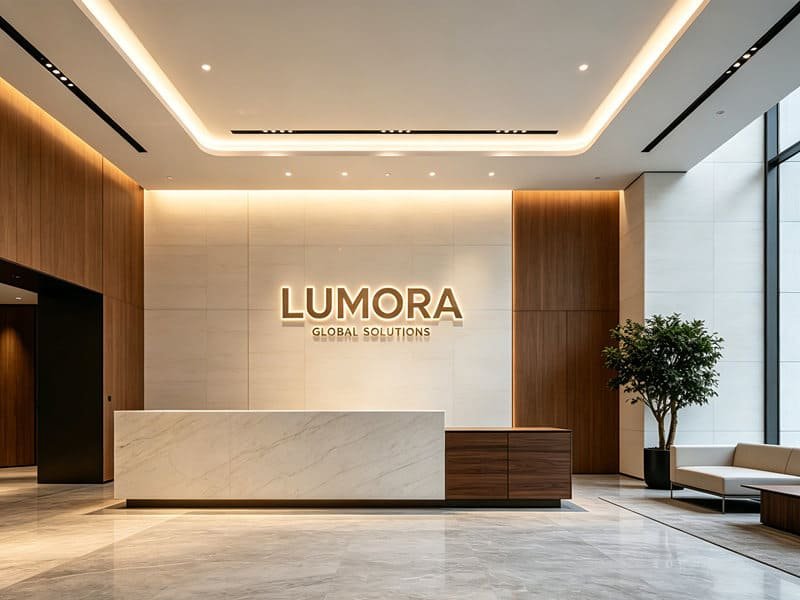
The Psychology of Thin-Slice Judgments
People make incredibly fast decisions. In psychology, these are called thin-slice judgments. Within just a few seconds of entering your office, a client has already formed an opinion about your professionalism, your attention to detail, and your credibility. They look at your furniture, your lighting, and most importantly, your signs. A high-quality custom lobby sign immediately tells the viewer that they have come to the right place and that your business is stable, reliable, and trustworthy.
Conversely, a blank wall or a cheap, paper sign taped to a desk suggests a lack of permanence. It signals that your business might not be fully established. If you invest in your physical space, you tell your clients that you care about quality. This simple visual cue can put patients at ease in a medical clinic or give clients confidence when entering a high-stakes law firm.
Your Silent Brand Ambassador
Your lobby sign works for you 24 hours a day, seven days a week. It is your silent brand ambassador. It takes your digital brand—your website logo, your color scheme, and your fonts—and brings it into the physical world. Consistent branding across your entire building helps reinforce recognition. When visitors see your logo rendered in beautiful, three-dimensional letters behind your reception desk, your brand identity becomes much more memorable.
Boosting Employee Pride and Company Culture
We often think about lobby signs in terms of our customers, but they are just as important for our employees. Your team walks past your lobby signs every morning when they arrive at work. A clean, inspiring brand statement fosters a sense of pride and belonging. It reminds your team of the company’s values, mission, and identity. A workspace that feels cohesive and professional has been shown to boost employee morale and productivity. When your office looks organized and professional, your team is more likely to perform at their best.
Comprehensive Comparison of Lobby Sign Types
Lobby signage is not a one-size-fits-all product. There are several different styles of signs, and each serves a unique purpose. Understanding these styles will help you choose the best fit for your space, budget, and business goals. Let’s look at the most popular options used in modern offices today.
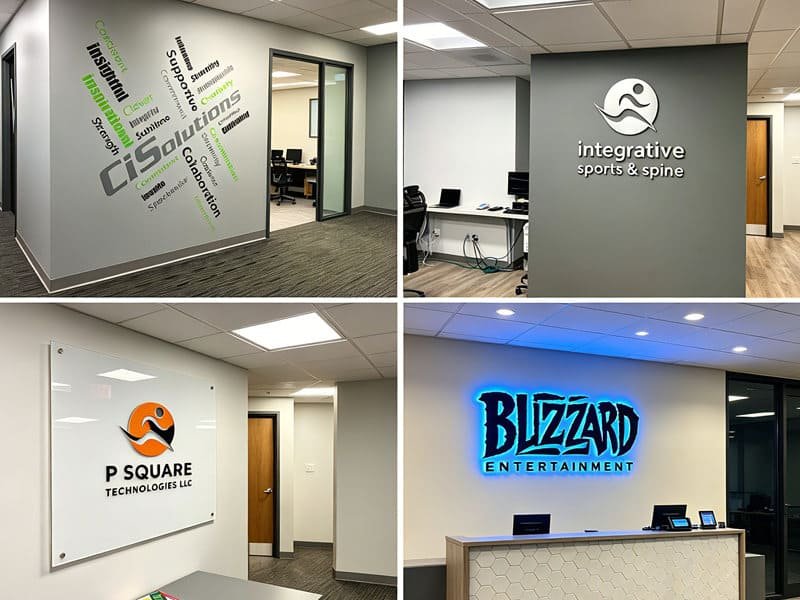
1. Dimensional Letters and Logos
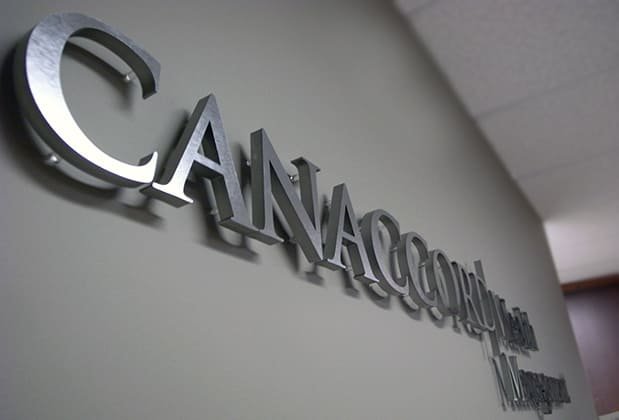
Dimensional letters are individual three-dimensional pieces mounted directly to your wall. They are incredibly popular because they add physical depth to your logo. As natural or artificial light hits these letters, they cast subtle shadows on the wall. This shadow effect increases readability and gives the sign a premium, permanent appearance. Many law offices, financial firms, and corporate offices prefer dimensional letters because they look substantial and serious. You can have them cut from acrylic, metal, or foam, depending on your budget.
2. Acrylic Panel Signs
Acrylic panels are highly versatile and modern. Instead of mounting individual letters to the wall, your logo and company name are applied to a flat sheet of clear, colored, or frosted acrylic. This panel is then mounted to the wall using metal standoffs. Standoffs are small metal posts that screw into the wall, holding the acrylic panel about an inch or two away from the surface. This creates a beautiful “floating” effect with elegant shadows behind the panel. Acrylic panel signs are a smart option for leased spaces because they are easy to remove and relocate if your business moves to a new building.
3. Metal Letters and Logos
If you want to communicate strength, permanence, and high-end prestige, metal is the gold standard. Solid metal signs are typically made from aluminum, stainless steel, brass, or bronze. Aluminum is the most popular metal because it is lightweight, resists rust, and can be easily routed into precise shapes. Metal finishes can be highly polished to look like a mirror, or brushed for a soft, textured appearance. Brushed metal finishes are excellent for bright lobbies because they do not reflect glare from windows.
4. Backlit and Halo-Lit Signs
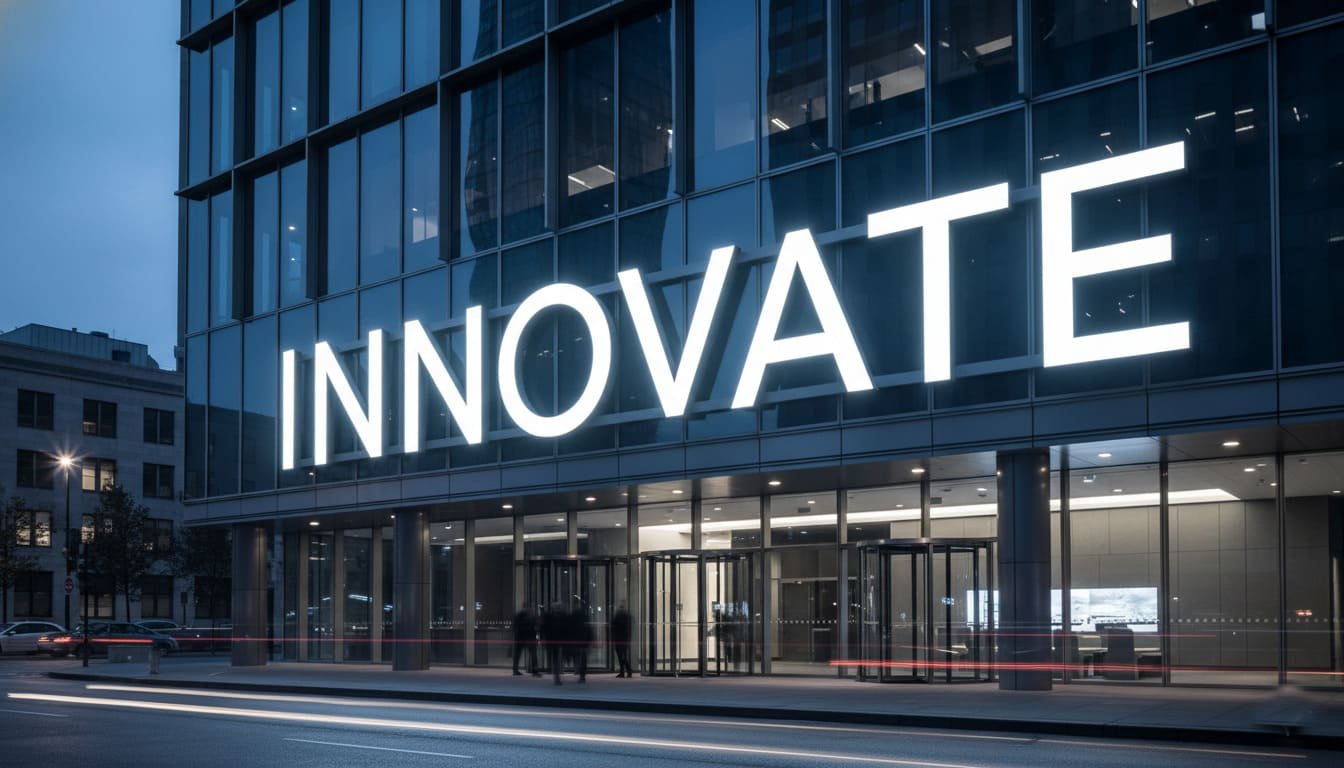
Backlit signs use modern LED technology to make your brand glow. LEDs are placed behind individual dimensional letters or inside a custom panel, casting a soft, warm light backward onto the wall. This is called a “halo-lit” effect because it creates a glowing outline around each letter. Backlit signs are incredibly eye-catching and work well in dark lobbies, basements, or areas with changing natural light throughout the day. They give your reception space a modern, tech-forward, and luxury feel.
5. Wall Graphics, Vinyl Lettering, and Murals
Not every wall needs a heavy metal or plastic sign. Wall graphics and vinyl lettering allow you to turn an entire blank wall into an artistic brand statement. Printed on high-quality, adhesive vinyl, these graphics can display large-scale logos, colorful office murals, or your company’s mission statement. Wall graphics are affordable, easy to install, and can easily transform a boring hallway or waiting room into an exciting and engaging environment.
6. Directory Boards
Directory boards are essential for multi-tenant buildings or offices with many departments. Usually placed near the entrance or the elevator landing, directories list the names of businesses, room numbers, and floors. They can be static boards with sliding metal or plastic letters, printed panels behind clear glass, or modern digital screens. A clear directory board is the first step in helping visitors find where they need to go without feeling confused.
7. Wayfinding and Directional Signs
Wayfinding signs are the navigational guides of your space. They include door plaques, overhead hanging signs, directional arrows, and floor graphics. These signs are functional necessities that work together to guide visitors through hallways, elevators, restrooms, and emergency exits. For your wayfinding signs to be effective, they must be clear, simple, and placed at natural decision points—before a visitor has to choose which way to turn.
| Sign Type | Primary Material | Key Benefit | Best Use Case |
|---|---|---|---|
| Dimensional Letters | Acrylic, Metal, Foam | Adds depth and shadows | Behind front desks, law firms |
| Acrylic Panels | Frosted/Clear Acrylic | Easy to move, modern look | Leased offices, medical clinics |
| Metal Letters | Aluminum, Steel, Brass | Timeless, premium feel | Corporate HQs, banks |
| Backlit / Halo-lit | Metal/Acrylic with LEDs | High visibility, dramatic glow | Luxury hotels, creative agencies |
| Wall Graphics | Adhesive Vinyl | Transforms large walls affordably | Break rooms, startup offices |
Material, Finish, and Backdrop Selection Matrix
Choosing the right material for your lobby sign is where your design decisions get practical. The wrong material can look cheap, wear out quickly, or fail legal accessibility rules. A tech startup and a traditional law practice both need lobby signs, but they should not use the same materials. Let’s look at the best materials and backdrops for your signs.
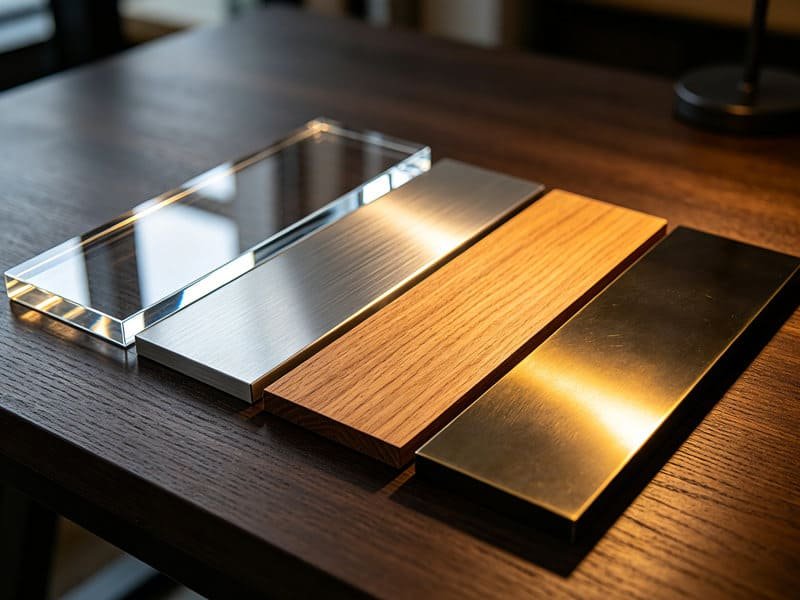
Acrylic Sheets: Sleek, Colorful, and Contemporary
Acrylic is a high-quality plastic sheet that looks exactly like glass but is much lighter and stronger. It is one of the most popular materials for interior signs because it is easy to cut and comes in thousands of colors. You can choose a glossy finish for a vibrant, energetic look, or a frosted finish for a subtle, professional feel. Frosted acrylic is excellent because it diffuses light, preventing glares and reflections that can make text hard to read.
Solid Metals: Brushed Aluminum, Stainless Steel, Brass, and Bronze
If durability and prestige are your top goals, solid metals are your best choice. Brushed aluminum is lightweight, highly resistant to scratches, and gives a clean, modern corporate look. Stainless steel is heavier and highly durable, making it perfect for long-term use in busy, high-traffic lobbies. Brass and bronze offer a warm, traditional, and historic feel, which is why they are frequently used by heritage brands, banks, and prestigious law firms.
Wood and Custom Laminates
Wood signs add warmth, comfort, and an organic feel to your workspace. They work beautifully in boutique hotels, creative agencies, and earthy, natural interiors. You can stain the wood to show off its natural grain, or paint it to match your company colors. If you want the look of premium metal or wood but are working with a tight budget, custom laminates are an excellent choice. Laminate signs apply a thin layer of real brushed metal or wood texture over a lightweight plastic or foam base, giving you a high-end look at a much lower cost.
PVC and Foam Board: Budget-Friendly FCO Solutions
PVC and foam boards are lightweight, rigid plastics that are highly cost-effective. They can be easily cut using high-speed CNC routers to create individual flat-cutout (FCO) letters. Once cut, they can be painted or wrapped in vinyl. While they do not have the premium weight of solid metal or acrylic, they are excellent options for startups, temporary event displays, or budget-conscious offices looking for clean, three-dimensional lettering.
Glass and Etched Window Films
Glass signs are elegant and highly sophisticated. They are often reverse-etched, meaning the logo is carved into the back of the glass sheet, leaving the front smooth and easy to clean. If you have glass walls or large windows in your lobby, you can also use custom adhesive window films. Etched or frosted window films can display your logo while providing privacy for conference rooms and executive offices, allowing natural light to pass through while keeping meetings confidential.
Biophilic Backdrops: Moss Walls and Acoustic Wood Panels
One of the biggest modern design trends is biophilic design—bringing natural elements indoors. Many modern businesses choose to mount their custom lobby signs directly onto living walls or preserved moss backdrops. The contrast of a sleek, brushed metal or glowing LED logo against the deep green texture of natural moss creates a dramatic and welcoming entrance. Acoustic wood panels are another popular backdrop. Made of vertical wooden slats, they add texture to your walls while helping absorb echoes and noise in busy lobbies.
| Material | Expected Lifespan | Maintenance Need | Visual Vibe |
|---|---|---|---|
| Acrylic | 10+ Years (Indoor) | Low (Dusting, wipe fingerprints) | Modern, clean, colorful |
| Brushed Aluminum | 15+ Years (Indoor) | Very Low (Resists smudges) | Professional, high-tech, sleek |
| Natural Wood | 5 – 10 Years (Needs seal) | Medium (Avoid high humidity) | Warm, rustic, organic |
| PVC / Foam | 3 – 7 Years (Indoor) | Low (Dusting only) | Simple, lightweight, colorful |
Spatial Rules and Architectural Scaling Guidelines
Even the most beautiful lobby sign will fail if it is the wrong size. If your sign is too small for your wall, your business will look small and unconfident. If it is too large, it will look aggressive and crowd the room. To ensure your sign looks balanced, professional, and is easy to read, you must follow clear architectural rules for scaling and placement.
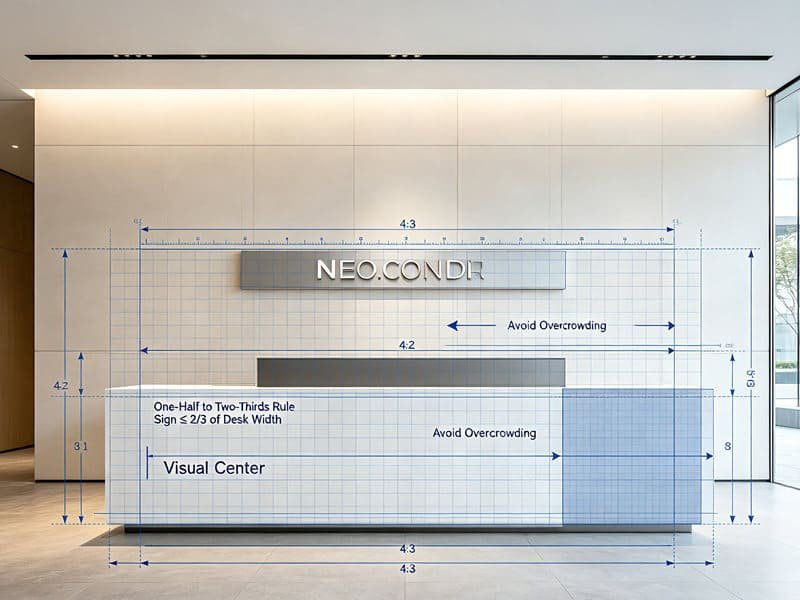
The One-Half to Two-Thirds Rule
When placing a logo sign behind a reception desk, the width of your sign should be between one-half (50%) and two-thirds (65%) of the width of the reception desk. For example, if your front desk is 6 feet wide, your logo sign should be between 3 and 4 feet wide. This sizing creates a natural visual anchor, ensuring the sign feels connected to the furniture below it. If you are mounting a sign on a large blank wall without any furniture below it, aim for the sign width to be about half the width of the wall itself. If you have a 10-foot-wide wall, starting with a 5-foot-wide sign is an excellent baseline.
Viewing Distance and Letter Height
Your sign must be easily readable from a distance. The basic rule for legibility is that your letters should be at least **1 inch tall for every 25 feet of viewing distance**. If your visitors will be standing about 50 feet away when they first look at your sign, the letters must be at least 2 inches tall. If you are placing a sign near a busy roadside outside your window, the letters will need to be much larger. Inside an office lobby, standard dimensional letters are usually between 3 to 8 inches tall, which is perfect for up-close viewing.
Sightlines and Height Placement Standards
A sign mounted too high or hidden behind a column is useless. Your sign should sit directly within your visitor’s natural sightline. When a person is standing, their average eye level is about 5 feet (60 inches) high. The horizontal center of your sign should be mounted between **60 and 72 inches from the finished floor**. This ensures that the sign is easily visible to standing visitors and is not blocked by computer monitors, desk lamps, or receptionist staff working at the front desk.
| Viewing Distance (Feet) | Minimum Letter Height (Inches) | Recommended Letter Height (Inches) |
|---|---|---|
| 10 – 25 Feet | 1 Inch | 2 – 3 Inches |
| 25 – 50 Feet | 2 Inches | 4 – 6 Inches |
| 50 – 75 Feet | 3 Inches | 6 – 8 Inches |
| 100+ Feet | 4 Inches | 8 – 12+ Inches |
Technical Execution, Illumination & Installation Methods
A great sign design can be ruined by poor installation. If your letters are crooked or your wires are showing, your space will look messy and unprofessional. Proper technical execution ensures your sign is safe, secure, and perfectly level. Let’s look at how professional sign makers install and light lobby signs.
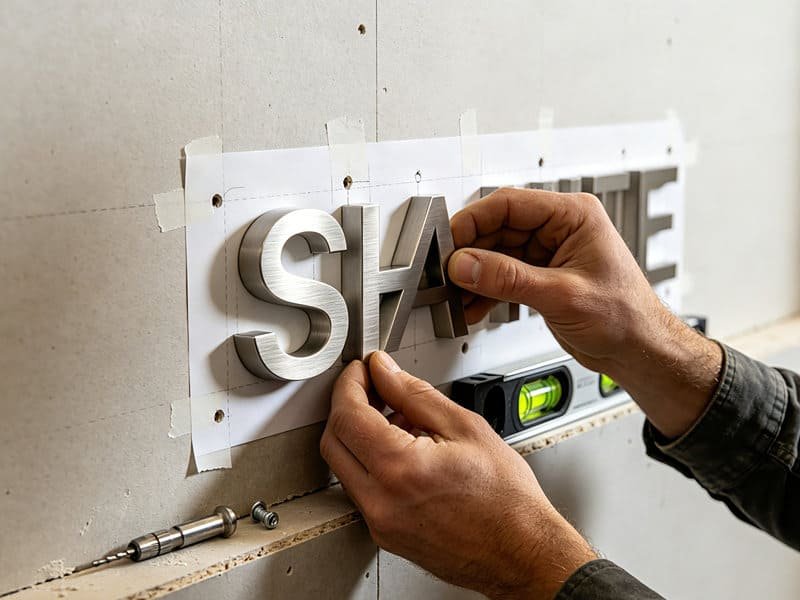
Stud Mounting vs. Tape and Silicone
How your sign is mounted depends on its weight and material. Lightweight letters made of thin acrylic, PVC, or foam can be mounted without drilling holes. Instead, installers use high-strength, double-sided tape and clear silicone adhesive. This is a clean, non-invasive method that does not damage your walls. However, if your letters are heavier—such as solid metal, thick glass, or letters larger than 8 inches tall—they must be stud mounted. Stud mounting involves drilling small holes into the wall, inserting metal threaded studs into the back of each letter, and securing them inside the wall using anchors and structural adhesive. This is the most secure method for heavy signs, preventing them from falling and causing injury.
Illumination Technologies: Halo-Lit, Edge-Lit, and Face-Lit
Illuminated signs can elevate a plain office into a highly engaging space. For **halo-lit** signs, individual letters are mounted about an inch away from the wall using spacers, with LEDs pointing backward. This creates a soft, glowing outline around each letter. **Edge-lit** signs use LED lights along the outer edges of an acrylic or glass panel, illuminating the etched design while keeping the rest of the sign clear. **Face-lit** channel letters are illuminated from within, letting the entire front of each letter glow brightly. LED lights are energy-efficient, produce very little heat, and have a long lifespan, making them cost-effective for daily office use.
Lighting Temperature: Warm White vs. Cool White
The color of your light—called lighting temperature—sets the mood of your lobby. Lighting temperature is measured in Kelvin (K). Harsh, cool-white LEDs (5000K to 6500K) can look cold, sterile, and clinical. Modern businesses are moving away from cool light and specifying warm-white LEDs (3000K to 4000K). Warm lighting creates a relaxing, hospitality-driven atmosphere that feels comfortable and welcoming to visitors.
Concealing Wires and Electrical Planning
If you choose an illuminated sign, electrical planning must start early. Every lit letter needs low-voltage wiring. If you have individual letters, your installer must drill holes behind each letter to pull the wires through the drywall into the empty space behind the wall. These wires are then connected to a remote power supply box. If your wall is solid concrete or brick, you cannot easily hide wires inside the wall. In this case, you should mount your letters to a custom backer panel or box, allowing the wires to be concealed inside the panel itself before mounting it to the wall.
Navigating ADA Compliance & Accessibility Regulations
Under the Americans with Disabilities Act (ADA), permanent signs that identify rooms or spaces must meet strict design and placement rules to ensure they are accessible to everyone, including people with visual impairments. Failing to comply with these rules can result in expensive building inspection failures, lawsuits, and non-compliance fines. Let’s look at the legal requirements you must follow when planning your office signs.
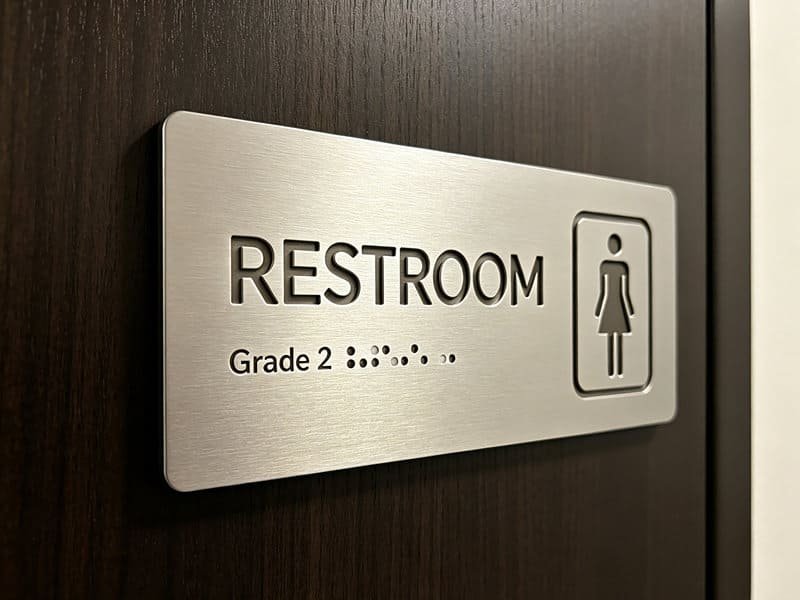
Permanent Room Signs vs. Directional Signs
The ADA draws a clear line between two types of signs. **Permanent room signs** are those that label fixed spaces that do not change frequently. Examples include restrooms, conference rooms, kitchen spaces, stairwells, and room numbers. These signs are legally required to meet full ADA standards, including tactile letters and Braille. **Directional and informational signs** (such as “Conference Rooms A-D →” or “Exit This Way”) are temporary or informational, meaning they do not require Braille or raised characters, though they must still be easy to read with high contrast.
Tactile and Braille Standards
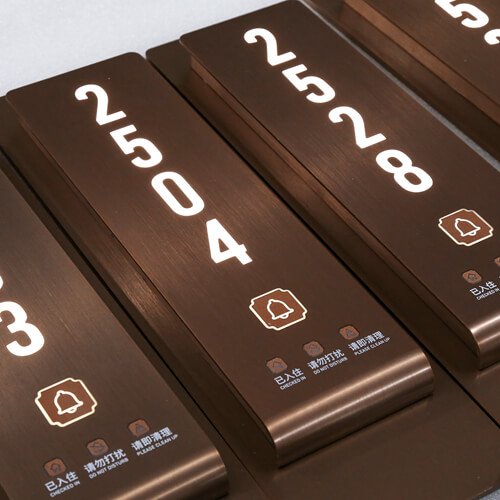
To ensure visually impaired visitors can read your signs by touch, permanent room signs must follow specific tactile rules. Tactile letters must be raised at least **1/32 of an inch** from the background surface. The font must be simple and clean, using a sans-serif typeface like Helvetica or Arial. Script, italic, or condensed fonts are not allowed. Below the text, you must include **Grade 2 Braille**. The Braille dots must have a domed shape (never flat) and be positioned directly below the corresponding line of text.
Contrast, Finishes, and Legibility
Your signs must be easy to read for people with low vision. This means you must ensure a **high contrast ratio** between the text color and the sign background. For example, dark blue text on a white background, or white text on a dark charcoal panel. Additionally, all ADA signs must have a **matte, non-glare finish**. Shiny, glossy surfaces reflect light from overhead bulbs, making the text impossible to read for visitors with light sensitivity.
ADA Mounting Heights and Placement Rules
Where you install your ADA signs is legally mandated. You must mount ADA room signs on the wall on the **latch side of the door** (the side that opens), not on the door itself. This prevents visitors from being struck by the door if someone opens it while they are trying to read the sign by touch. The baseline of the tactile text must be mounted between **48 and 60 inches** from the finished floor. This ensures the sign is accessible to both standing individuals and wheelchair users.
| ADA Design Element | Legal Requirement | Purpose |
|---|---|---|
| Tactile Raised Text | Minimum 1/32 Inch raised from sign face | Allows reading by touch |
| Braille Style | Grade 2 Braille with domed dots | Standardized contracted tactile writing |
| Sign Finish | Matte or non-glare finish only | Reduces light reflection for low vision |
| Mounting Location | Latch side of door, 48 – 60 inches height | Ensures safe and standardized access |
Traditional vs. Digital Lobby Signs: A Definitive Comparison
In today’s tech-driven business environment, companies have to choose between a classic, traditional physical lobby sign and a modern, digital screen display. Both options have unique advantages and draw-offs. Let’s compare them across key categories to see which is best for your brand.
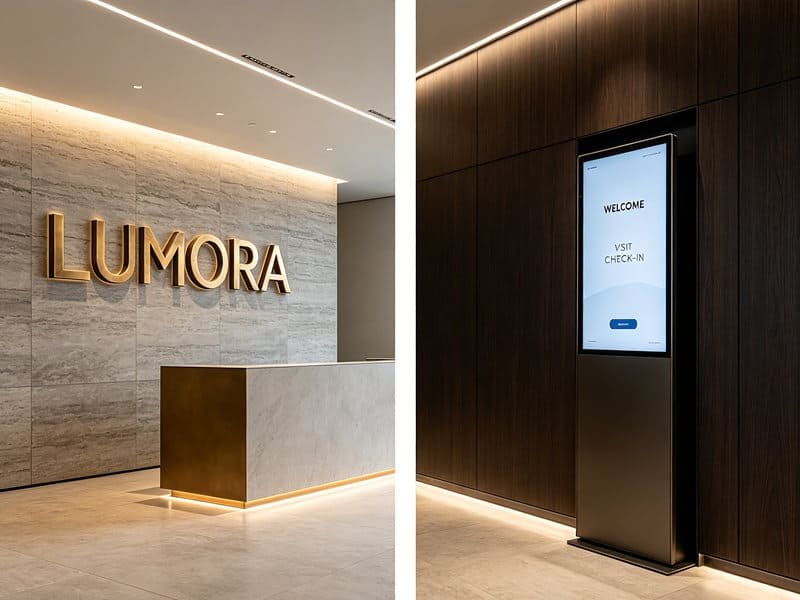
Visual Style, Warmth, and Authority
Traditional signs—made of solid wood, thick acrylic, or polished metal—offer a classic, timeless beauty. They convey stability, prestige, and trust. For fields like law, accounting, banking, and medical practices, a traditional sign tells clients that your company is established and permanent. Digital signs, on the other hand, project a bold, high-tech, and futuristic vibe. They capture attention instantly using animations and moving graphics, making them perfect for creative studios, tech startups, and co-working spaces looking to showcase innovation.
Flexibility and Content Updates
Traditional signs are static. Once your sign is cut and mounted, changing the message requires a physical redesign, which is costly and time-consuming. Digital signs offer complete flexibility. Using easy-to-use content management software (CMS), you can update your screens in real-time with just a few clicks. You can display seasonal greetings, highlight your employee of the month, show promotional videos, or stream real-time news, weather, and traffic reports to keep waiting visitors entertained.
Lifespan and Maintenance
Traditional signs are incredibly durable. Once installed, they require almost no maintenance—just occasional dusting. A high-quality metal or acrylic interior sign can easily last over **10 to 15 years** without showing signs of wear. Digital signs are more complex. Commercial screens typically last between **3 and 7 years** of continuous use. They require steady electrical power, software updates, internet connectivity, and can experience technical glitches, screens burn-ins, or hardware failures over time.
Upfront and Long-Term Cost
Traditional signs are typically cheaper to start with because you only pay for materials, fabrication, and installation once. Digital signs have higher initial upfront costs. You must purchase commercial-grade monitors, digital signal players, software licenses, and pay for professional mounting and electrical setup. However, for offices that change their branding, room directories, or promotions frequently, digital screens can save money in the long run by eliminating recurring printing and fabrication costs.
| Comparison Feature | Traditional Lobby Signs | Digital Lobby Signs |
|---|---|---|
| Main Benefit | Timeless, prestigious, stable | Dynamic, flexible, engaging |
| Lifespan | 10 – 15+ Years | 3 – 7 Years |
| Upkeep Required | Very Low (Routine dusting) | High (Software updates, IT support) |
| Typical Use | Law firms, clinics, luxury hotels | Tech firms, creative offices, co-working |
Sizing the Investment: Budget and Cost Analysis (2026 Data)
How much does a custom lobby sign cost? This is one of the most common questions business owners ask, and the answer varies depending on materials, size, complexity, and lighting. Treating your lobby sign as an investment rather than an expense is key to choosing a sign that holds its value for years to come. Let’s look at average market prices and key cost drivers.
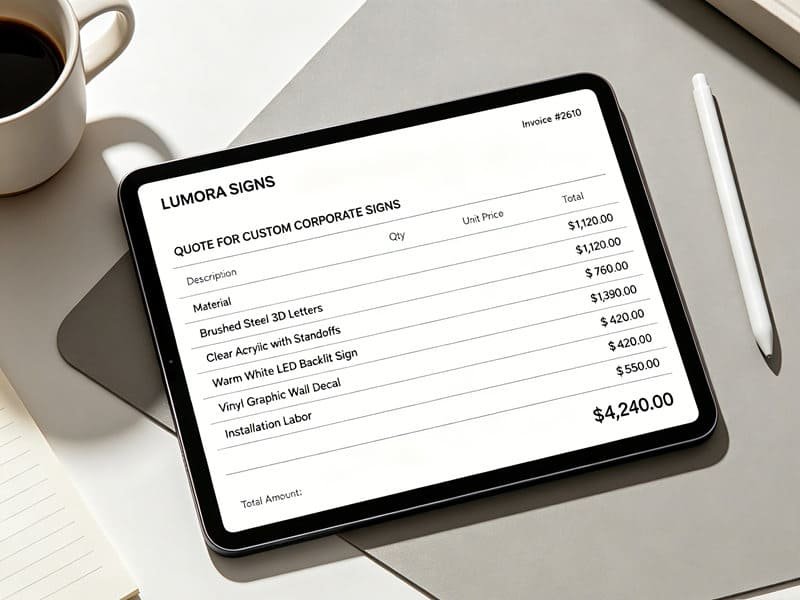
Average Lobby Sign Cost Ranges
The cost of a custom lobby sign typically falls into several distinct price brackets depending on the complexity of its design:
- $100 – $500 (Basic Flat Signs): Simple vinyl wall decals, acrylic printed door numbers, or basic directional arrows. These are highly cost-effective and perfect for secondary office spaces or short-term promotions.
- $500 – $1,000 (Average Size 3D Signs): Individual three-dimensional letters made of painted PVC, foam, or flat-cut acrylic. This is the most common price range for standard corporate office lobbies and reception areas.
- $1,000 – $1,800 (Large or Complex Signs): Large-scale acrylic panels, frosted glass panels with premium steel standoffs, or dimensional signs with custom metallic laminates. This range delivers excellent visual polish and style.
- $1,800 – $4,500 (Backlit or Solid Metal): Solid cut metals like aluminum, stainless steel, brass, or premium backlit LED halo signs. These signs require more fabrication time and electrical wiring, making them ideal for high-end corporate practices.
- $2,500 – $6,000 (Mixed Media with Lighting): Combining multiple materials, such as acrylic lettering mounted on a wood or concrete panel with halo LED backlighting. These are stunning visual centerpieces used in flagship office buildings.
Key Cost Drivers
When planning your budget, keep in mind these four factors that drive up fabrication and installation costs:
- Material Grade: Solid brass, bronze, and stainless steel cost significantly more than PVC, foam, or acrylic.
- Size and Complexity: Large-scale signs or logos with intricate, highly detailed letters take longer to cut and assemble.
- Illumination and Wiring: Adding LEDs, power transformers, and fishing wires behind drywall increases labor costs.
- Zoning and Permitting: Some commercial spaces require architectural permits or landlord approvals, which add administrative costs.
Crucial Pitfalls: 8 Mistakes to Avoid Before Lobby Sign Installation
Treating your lobby sign as the last item on a long office renovation checklist is a major mistake. Too often, business owners order their signs after the paint is dry, the furniture is set, and the budget is nearly gone. This leads to costly errors and disappointing designs. Let’s look at the eight most common mistakes you must avoid before installing your signs.
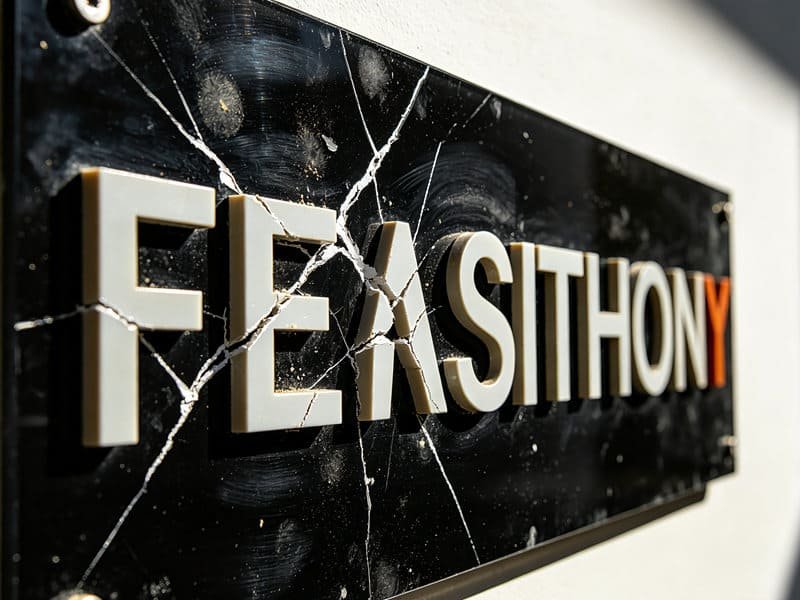
1. Inconsistent Branding
Your lobby sign must match your brand guidelines exactly. Using faded colors, mismatched fonts, or altering the spacing of your logo to save money looks amateur. Inconsistency can confuse your clients and damage your business credibility.
2. Poor Placement and Obstruction
Where you place your sign matters. If you mount a beautiful sign too close to desktop monitors, plants, or behind a heavy column, its visual impact is lost. Always place your sign on the first wall a visitor faces upon entering, aligned with their natural sightline.
3. Low-Quality Materials
Cheap materials send a cheap message. Peeling vinyl, bubbling adhesive, or yellowing plastics can make your company look unreliable. Invest in high-quality metals, UV-protected acrylics, and structural adhesives that hold up over time.
4. Incorrect Sizing
A sign that is too small for its wall looks lost and unconfident, while a sign that is too large looks aggressive and crowds the room. Always use the One-Half to Two-Thirds Rule to ensure your sign is perfectly proportioned to your desk and wall width.
5. Overlooking Safety and Local Permits
Installing custom signs without checking local building codes, safety rules, or landlord restrictions can lead to legal fines, delayed opening dates, or forced removal. Always work with a professional sign company that knows local zoning ordinances.
6. Weak Color Contrast
Your sign may feature your corporate colors, but those colors must also be highly readable. Placing dark blue lettering on a dark grey wall makes your sign impossible to read from a distance. Always ensure high contrast between your sign characters and your backdrop wall.
7. Clashing with Interior Décor
Your sign must match the architectural style of your office. Placing a futuristic, high-gloss pink acrylic logo sign in a traditional, wood-paneled law library creates a harsh visual clash. Match your materials (wood, steel, stone) to your overall interior decor.
8. Not Seeking Professional Help
Attempting a DIY sign installation to save a few dollars often leads to disaster. You risk drilling crooked holes, damaging expensive drywall, or installing heavy letters that fall and injure someone. Working with expert sign fabricators and professional installers ensures your sign is perfectly level, secure, and pristine.
Maintenance, Inspection, and Long-Term Care Schedules
Once your lobby sign is successfully installed, your job is not quite done. To protect your investment and maintain a polished, professional image, you must establish a regular care and cleaning schedule. A dusty, dirty, or flickering sign can undermine your credibility. Let’s look at how to keep your signs looking brand new for years.
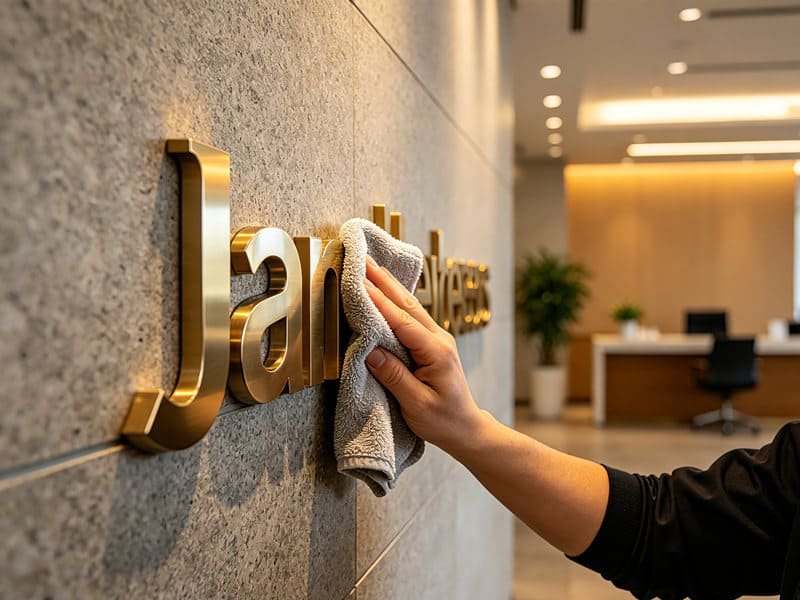
Routine Cleaning Guidelines
Dust and fingerprints are the main enemies of interior signs. To keep your signs pristine:
- Use Microfiber Cloths: Always wipe your signs with soft, dry microfiber cloths. Rough paper towels or sponges can scratch sensitive acrylic and polished metal surfaces.
- Avoid Ammonia and Harsh Cleaners: Ammonia-based glass cleaners (like Windex) can cause clear acrylic to become cloudy or yellow over time. Instead, use a mild mixture of warm water and soap, or specialized plastic cleaners.
- Handle with Care: Never scrub hard, especially around delicate lettering or vinyl decals, as this can cause them to peel or lift.
Scheduled Maintenance Checks
Regularly inspect your signs using this simple checklist to identify and address minor issues before they become costly repairs:
Monthly: Perform a quick visual check. Look for dust buildup, fingerprints, or loose elements. For illuminated signs, make sure there are no flickering LEDs or dim spots.
Quarterly: Inspect the mounting hardware. Check if standby screws, bolts, or silicone adhesives are still stable and secure. Gently wipe down the sign using a damp microfiber cloth.
Annually: For backlit signs, have a certified sign technician inspect your electrical connections, check transformers, and clean dust out of internally lit channel letter boxes to ensure fire safety compliance.
FAQ Section
When researching office lobby signage, business owners often have many practical questions. We have gathered the top five questions most frequently asked by businesses, with clear, detailed answers based on professional sign fabrication and installation standards.
Q1: What are the most common types of lobby signs?
Answer: The five most common types of lobby signs used in business offices are:
- Dimensional letter signs: Individual letters made of acrylic, metal, or foam that stand out from the wall.
- Acrylic panel signs: Flat sheets of acrylic mounted to walls using metallic standoffs, creating a floating panel look.
- Backlit and halo-lit signs: Dynamic signs using LED backlighting to cast a glowing outline around your logo.
- ADA-compliant signs: Accessible door plaques with raised letters and tactile Grade 2 Braille.
- Wayfinding directional signs: Wall arrows, hanging directories, or floor graphics that guide visitors through your building.
Q2: Do all lobby signs need to be ADA compliant?
Answer: No, not all signs inside your lobby require ADA compliance. The law only mandates compliance for signs that identify **permanent, fixed-function rooms**. This includes restrooms, kitchen areas, conference rooms, room numbers, and emergency exit doors. Branding signs (like your main logo behind the reception desk) or temporary signs do not require raised letters or Braille, though they should still use easy-to-read, high-contrast layouts.
Q3: What materials work best for indoor lobby signs?
Answer: The best material depends on your brand identity, office style, and budget:
- Acrylic: Perfect for a modern, colorful, or contemporary look. It looks like glass but is lighter and highly customizable.
- Brushed Aluminum & Stainless Steel: Best for high-end corporate practices, banks, or law firms looking to project strength and stability.
- Wood: Ideal for creative agencies or boutique spaces looking for organic warmth and rustic style.
- PVC & Foam Board: Cost-effective, lightweight options that can be painted or wrapped in vinyl, perfect for startups.
Q4: How much does a custom lobby sign cost?
Answer: The cost varies widely based on size, materials, and complexity. On average, basic vinyl or flat cutout signs cost between **$100 and $500**. Standard three-dimensional acrylic or PVC letters cost between **$500 and $1,000**. Highly polished metals or backlit LED signs cost between **$1,500 and $5,000**, while complex mixed-media flagship signs can reach several thousand dollars. Getting a detailed quote from a professional fabricator is the best way to budget accurately.
Q5: Where should a lobby sign be installed?
Answer: A primary branding sign should be installed on the first major wall a visitor naturally faces upon entering your suite, typically directly behind the reception desk. It should be mounted at standing eye level, with the sign’s horizontal centerline between **60 and 72 inches from the floor**. For ADA room identification signs, they must be mounted on the wall on the latch side of the door, at a centerline height between **48 and 60 inches** from the floor.
Conclusion
A well-designed lobby sign is far more than a simple decorating choice. It is a vital business asset that shapes how clients, visitors, and employees perceive your company. From setting a strong first impression using the right materials to ensuring legal accessibility through clear ADA standards, every sign in your office should work together as a single, cohesive system. By planning early, choosing quality materials like brushed metal or sleek acrylic, and following proportional sizing rules, you can transform a plain entrance into a powerful, professional, and welcoming workspace.
If you are planning an office renovation, a rebrand, or setting up a brand-new workspace, you do not have to tackle the process alone. Designing and installing custom office signage requires technical knowledge, precise craftsmanship, and deep expertise. Partnering with a reliable, professional sign provider ensures your signs are built to perform, meet all legal codes, and align beautifully with your brand identity.
Ready to elevate your workspace and make a lasting first impression? Let us help you bring your vision to life with high-quality custom signs.
At our custom signage studio, we specialize in building professional interior and exterior signage solutions tailored to your unique business goals, budget, and space requirements. Our expert team of designers, fabricators, and professional installers handle everything from initial design layouts and permitting to structural mounting and LED wiring. We take pride in using only premium-grade materials and state-of-the-art equipment to ensure your signage stands out and looks pristine for years to come.