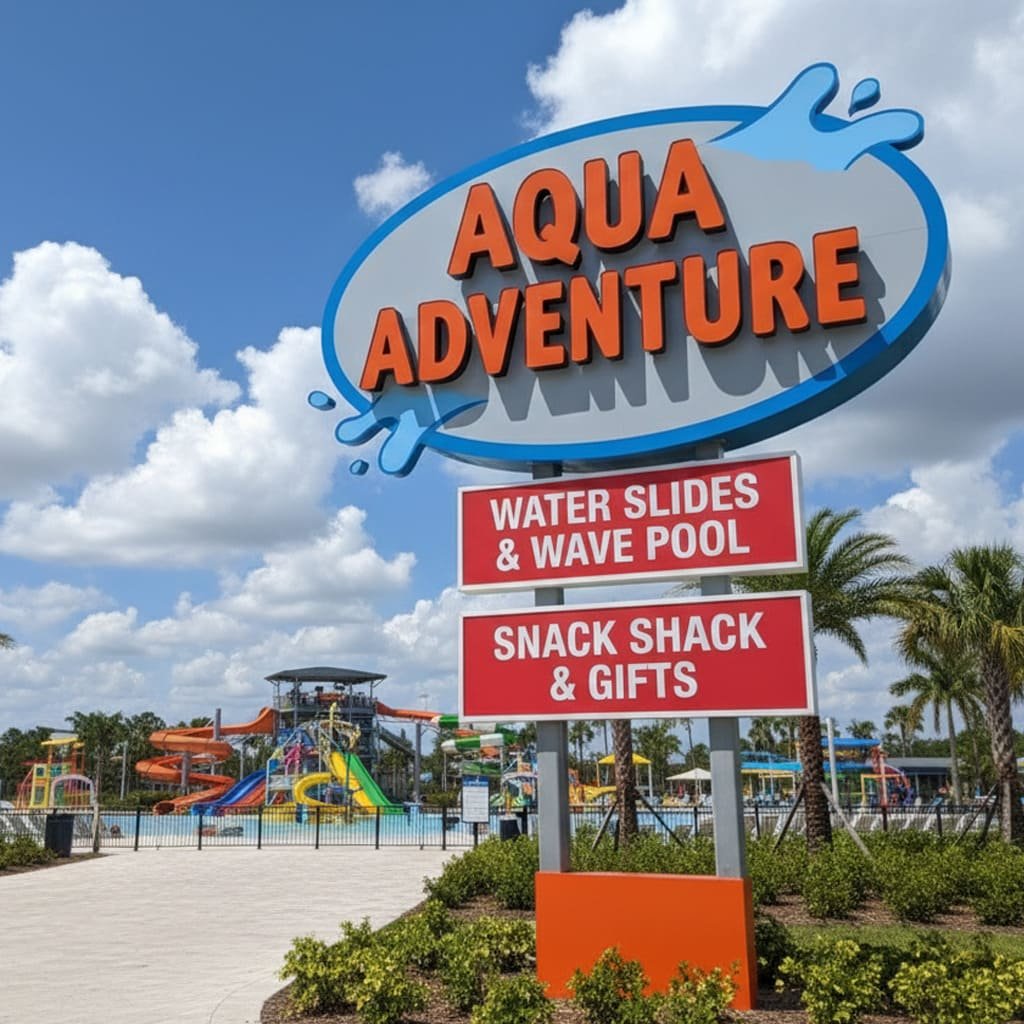
1. Defining Freestanding Signs: Independent Landmarks
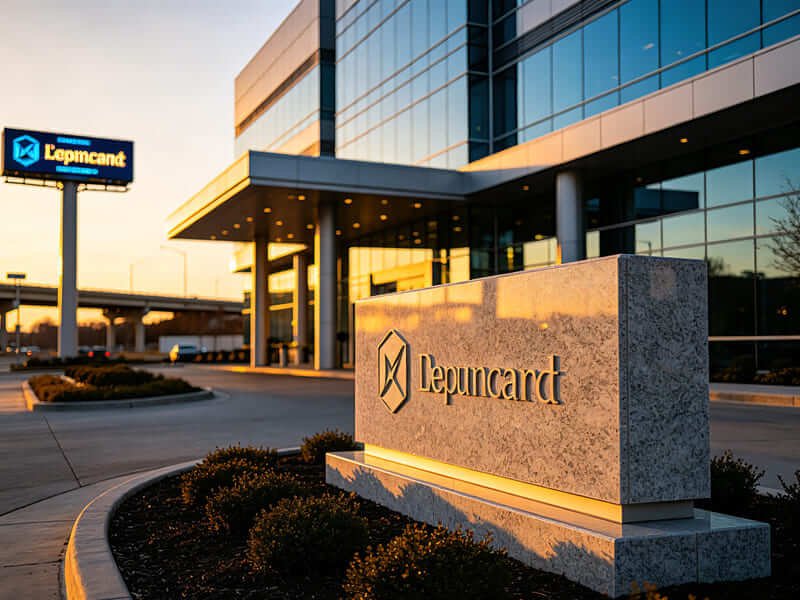
To master the world of signage, we must first define our terms. As specified in professional manufacturing standards, such as those at the Custom Signage Factory, a freestanding sign is any signage structure that is not attached to a building or another structure. It stands entirely on its own support system, typically anchored into a concrete foundation. This independence gives the sign a unique role: it is a “landmark sign.”
While wall-mounted signs are essential for identifying a specific entrance, freestanding signs are the “navigational stars” for passing traffic. They are strategically positioned to maximize exposure, often placed at the very edge of a property’s “road frontage.” In the competitive business world, these signs provide unparalleled visibility because they intercept the viewer’s gaze long before the building itself comes into focus. For many properties, the freestanding sign is the primary visual reference used by the public, news media, and even navigation apps.
Freestanding vs. Building-Mounted: A Strategic Comparison
The choice between a wall sign and a freestanding sign often comes down to site context. If your storefront sits flush against a downtown sidewalk, a wall sign or a small blade sign is appropriate. However, if your business is separated from the road by a parking lot, landscaping, or significant setback, a freestanding sign is mission-critical. It effectively moves your brand name 50 or 100 feet closer to the potential customer’s eyes.
| Comparison Factor | Freestanding Signage | Building-Mounted Signage |
|---|---|---|
| Structural Independence | Self-supporting; requires foundation | Depends on building structural integrity |
| Distance Visibility | High; intercepts traffic early | Low to Moderate; requires close proximity |
| Permit Complexity | High; involves zoning and engineering | Moderate; focuses on facade aesthetics |
| Landmark Status | Serves as a primary site reference | Serves as an entrance identifier |
| Weather Exposure | 360-degree exposure; high wind loads | Shielded by building; limited exposure |
2. The Taxonomy of Freestanding Signs: Choosing Your Style
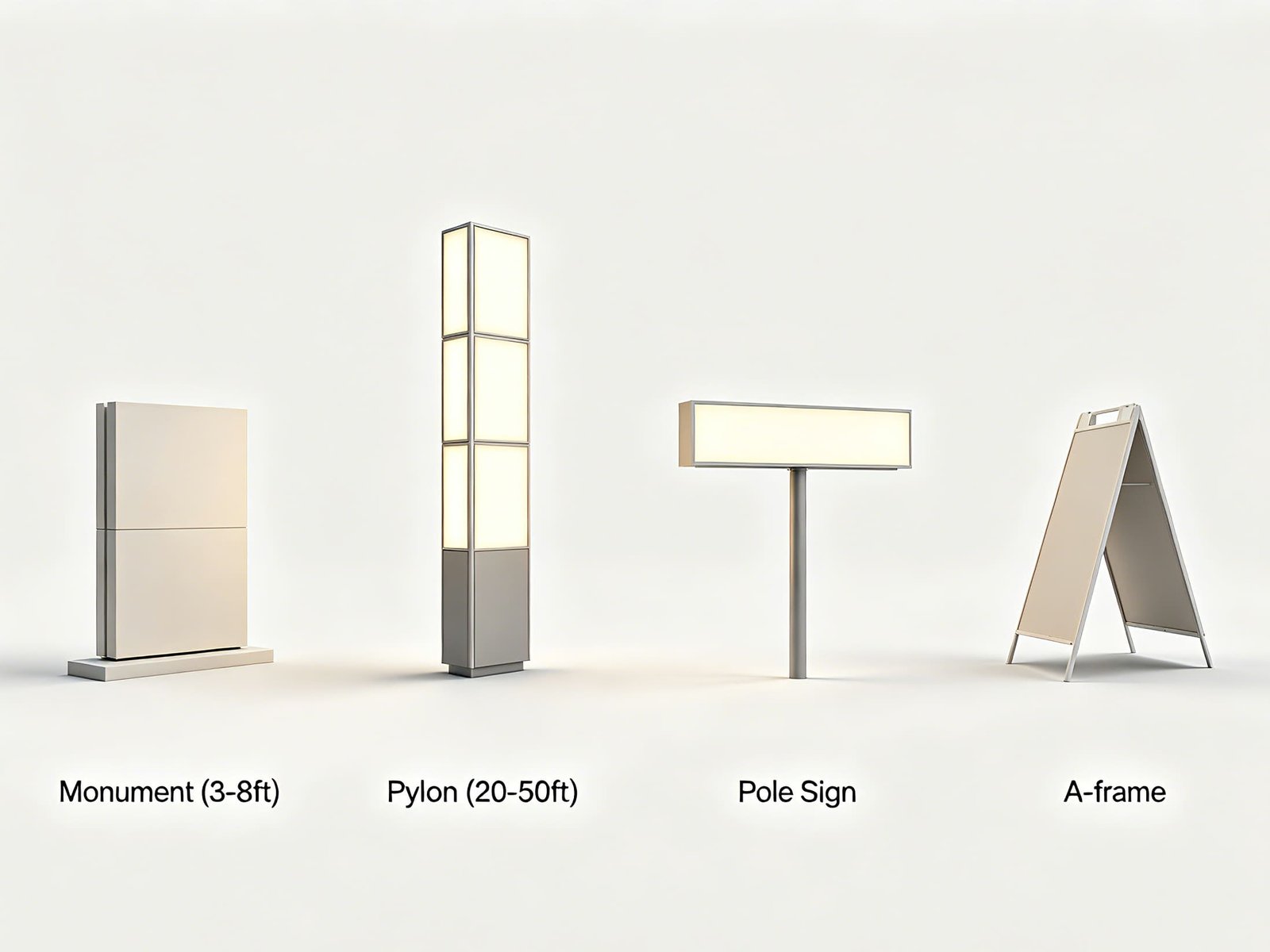
Every business location has unique needs. A small boutique in a quiet village has different requirements than a truck stop off a major interstate. Understanding the “taxonomy” of freestanding signs allows you to choose the structure that balances your brand goals with local regulations.
Monument Signs: The Ground-Level Authority
Monument signs are the most enduring and prestigious freestanding options. Typically standing between 3 and 8 feet tall, they sit at eye level for drivers. The hallmark of a monument sign is its solid, low-profile base. These are frequently constructed from durable materials like brick, natural stone, or precast concrete. As noted in the Custom Signage Factory catalog, monument signs are designed to harmonize with the surrounding landscape and architecture. They are the standard for schools, churches, high-end retail centers, and residential communities because they convey a sense of permanence and professional stability.
Pylon Signs: Dominating the Skyline
When visibility from a distance is the priority—such as for shopping centers, gas stations, or highway-adjacent businesses—pylon signs are the solution. These tall structures are mounted on one or two poles. The defining feature of a pylon sign is its height and scale. They often feature “cabinet” panels for multiple tenants, allowing a whole plaza to share a single landmark. Modern pylon signs often include decorative “pole skirts” to hide the steel supports, creating a monolithic, professional look that can be seen from over a mile away.
Pole Signs: Targeted Long-Range Visibility
Often used interchangeably with pylon signs, pole signs specifically refer to structures where the support pole is visible. “High-rise” pole signs are a common sight along interstates, reaching heights of 50 to 100 feet to clear overpasses and trees. While pylon signs focus on architectural aesthetics, pole signs focus on the raw efficiency of height and long-range brand exposure.
Post and Panel Signs: Versatility and Clarity
Consisting of one or more panels supported by vertical posts, these signs are the “workhorses” of directional and informational signage. They are cost-effective, easy to install, and highly customizable. You will often find these used as “wayfinding” tools on large medical or corporate campuses, or as temporary markers for real estate developments and construction projects.
A-Frame and Sidewalk Signs: Engaging the Pedestrian
Also known as “sandwich boards,” these are portable, freestanding signs that fold into an “A” shape. They are designed for the sidewalk, capturing the attention of people walking past your business. According to recent guides, nearly 76% of consumers enter a store for the first time because its sidewalk signs caught their eye. They are perfect for daily specials, menu teasers, or welcoming messages that can be easily stored overnight.
3. The Science of Visibility: Legibility and the Driver’s Eye
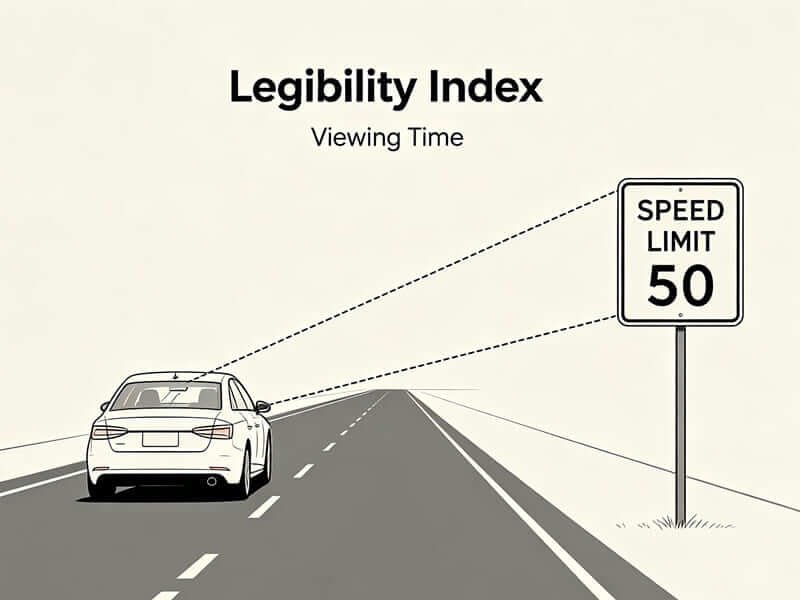
Visibility is not just about having a big sign; it’s about the science of human perception. A sign that is too small for the speed of traffic is a safety hazard and a marketing failure. Professional sign design relies on two critical factors: the Legibility Index and the 30-40% Rule.
The Legibility Index: Sizing for Success
How large do your letters need to be? The Federal Highway Administration and signage experts use a standard called the Legibility Index. Under ideal conditions, each inch of letter height provides approximately 30 to 40 feet of readable distance. However, in the “real world”—where drivers are dealing with glare, rain, and distractions—you should always aim for the higher end of that scale.
“A practical approach is to treat your sign like a one-sentence sales pitch. If you cannot say it quickly, the sign cannot either. Readability is where most freestanding signs win or lose.”
| Traffic Speed (MPH) | Required Viewing Distance | Minimum Letter Height |
|---|---|---|
| 25 MPH (Urban) | 150 – 200 Feet | 6 – 8 Inches |
| 45 MPH (Arterial) | 400 – 500 Feet | 12 – 15 Inches |
| 65 MPH (Highway) | 800 – 1,000 Feet | 24 – 30 Inches |
The 30-40% Rule: The Power of Negative Space
One of the most common mistakes business owners make is trying to cram too much information onto a sign. According to design guidelines from Walnut Creek and other municipalities, 30% to 40% of the sign face should be “white space” (empty space with no text or graphics). This negative space acts as a frame, allowing the eyes to focus on the core message. If a sign is cluttered with slogans, phone numbers, and multiple logos, it becomes “visual noise” that people simply ignore.
Color Contrast and Typography
Contrast is your primary tool for legibility. Dark letters on a light background or very light letters on a dark background are essential. For example, blue letters on a green background are nearly impossible to read from a moving car. Furthermore, light-colored letters on a dark background often appear larger to the eye, helping them “pop” at night. Avoid overly decorative fonts; simple, bold sans-serif typefaces are the gold standard for roadside visibility.
4. Structural Engineering: Built to Withstand the Elements
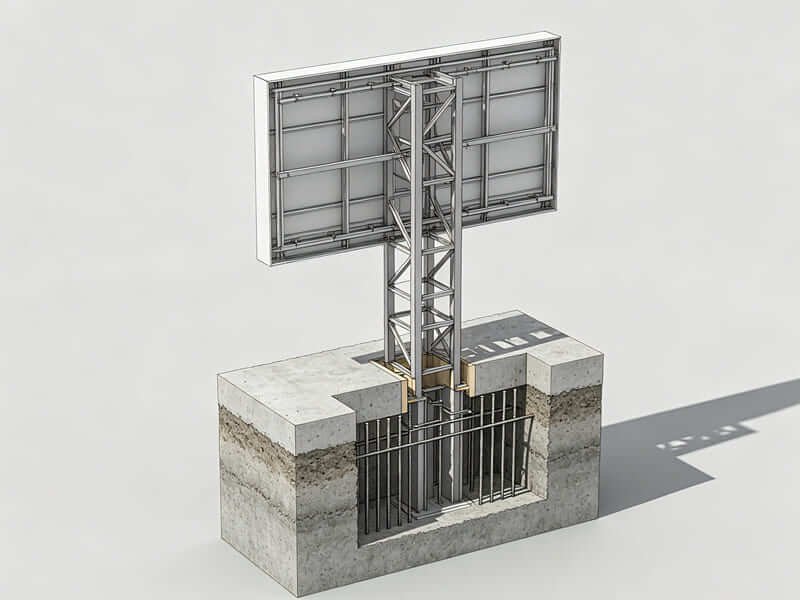
Because freestanding signs are permanent structures that stand in public areas, they must be engineered for safety. They face extreme weather, high wind speeds, and potential impacts. As a manufacturer, Custom Signage Factory emphasizes that these signs are infrastructure, not just art.
Foundation and Wind Load
In many regions, any freestanding sign over 8 feet in height requires construction plans that are signed and sealed by a Professional Engineer (PE). This is because the sign acts like a “sail.” High winds exert massive lateral pressure on the sign face, which must be transferred safely into the ground through a concrete foundation. In Northern climates, these foundations must be dug below the “frost line” (often 3 to 4 feet deep) to prevent the ground from “heaving” and tilting the sign during winter freeze-thaw cycles.
Materials and Longevity
The materials you choose determine whether your sign will look professional for 20 years or look like a liability after two.
- Aluminum: The preferred material for sign cabinets and faces. It is rust-proof, lightweight, and accepts high-quality “automotive-grade” paint finishes.
- Steel: Used for the internal “skeleton” and support poles. To prevent corrosion, these should be hot-dip galvanized or primed with rust-inhibiting coatings.
- Polycarbonate and Acrylic: These are used for the illuminated faces. Polycarbonate (like Lexan) is preferred for freestanding signs because it is impact-resistant and won’t shatter if hit by a rock or debris.
- HDU (High-Density Urethane): A modern alternative to wood. It can be carved to look like stone or wood but won’t rot, warp, or crack when exposed to moisture.
Engineering the “Vision Clearance Triangle”
Safety is also about where the sign *isn’t*. Almost every municipal code (such as Arlington, TX or Arcadia, CA) requires a “Vision Clearance Triangle” at intersections and driveways. Usually, no sign over 3 feet tall can be located within a 10-foot leg triangle at the property corner. This ensures that drivers can see oncoming traffic before pulling out. Ignoring this during the engineering phase is the fastest way to get your permit denied.
5. Lighting and Electrical Systems: 24/7 Brand Presence

A freestanding sign is only half-effective if it disappears when the sun goes down. Proper illumination extends your brand’s reach and provides safety for customers arriving at night. However, lighting is also one of the most regulated aspects of signage.
LED Technology: The Modern Standard
The signage industry has moved entirely away from neon and fluorescent tubes toward LED (Light Emitting Diode) systems. Why? LEDs use approximately 30% to 70% less energy and can last for over 100,000 hours of continuous use. For a factory like Custom Signage Factory, LED integration is standard because it allows for slimmer sign profiles and more even lighting without “hot spots.”
Illumination Styles
- Internal Illumination: The most common style for pylon and monument signs. The light is inside the cabinet, making the translucent faces glow.
- Halo-Lit (Reverse Channel): The letters are mounted with “standoffs” from the sign surface. The light shines out the back of the letters, creating a soft, sophisticated glow (a “halo”) around the characters. This is often required in high-end office parks.
- External Illumination: Using “gooseneck” lamps or ground-mounted spotlights to shine light onto the sign. This is ideal for carved wood or masonry signs that don’t have translucent parts.
Electrical Preparation: The 120V Rule
If you are installing a new freestanding sign, you must coordinate with a licensed electrician. Most signs require a dedicated 120V, 20-amp circuit. As a “pure production” factory, we provide the sign, but your electrician must run the power to within 5 feet of the sign location. One critical component is the Astronomical Timer. This smart device adjusts the on/off times daily based on the actual sunset and sunrise in your zip code, ensuring you never waste power during daylight hours.
6. Electronic Message Centers (EMCs): The Future of Dynamic Branding
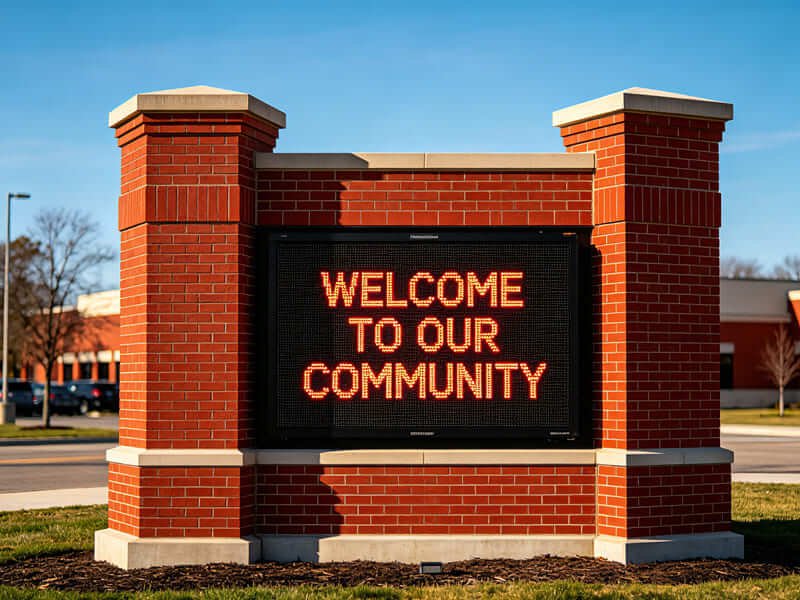
If you want your signage to be more than just a static landmark, you must consider the Electronic Message Center (EMC). Often called digital signs, these are computerized programmable LED displays that can be integrated into pylon or monument structures. As a modern Custom Signage Factory, we have seen these displays revolutionize how local businesses communicate. Unlike traditional signs where the message is fixed, an EMC allows you to change your content as fast as your business moves.
However, adding a digital screen is not just about buying a monitor. It involves understanding “pixel pitch” and “Nits.” Pixel pitch is the distance between the tiny LED lights on the screen; the smaller the pitch, the higher the resolution and the closer people can stand to read it. For roadside freestanding signs, a higher pitch is usually acceptable because the viewers are in moving vehicles. “Nits” refers to the brightness. During the day, an EMC needs to be incredibly bright (at least 5,000 to 7,000 Nits) to compete with direct sunlight. At night, it must automatically dim to avoid blinding drivers, a feature often required by municipal safety codes.
Operational Standards for Digital Signs
Because digital signs can be distracting if used incorrectly, many cities (like Arlington and Mount Prospect) have strict “static display” rules. Typically, a message must remain still for at least 8 to 10 seconds before changing. Transitions must be instant—no scrolling, fading, or flashing, as these can look like emergency vehicle lights to a driver. Most importantly, every EMC must have a “default mechanism.” If the screen or the software fails, it must be programmed to go black or freeze on a single image rather than flicker or strobe.
| Digital Sign Feature | Standard Requirement | Business Benefit |
|---|---|---|
| Static Display Time | 8 to 10 Seconds minimum | Ensures safety and driver focus |
| Transition Style | Instant (Slideshow style) | Professional, non-distracting look |
| Brightness Control | Automatic photocell dimming | Energy efficiency and code compliance |
| Resolution (Pitch) | 8mm to 16mm for roadside | Clear imagery for passing traffic |
7. Legal Standards, Zoning, and the Permit Hurdle
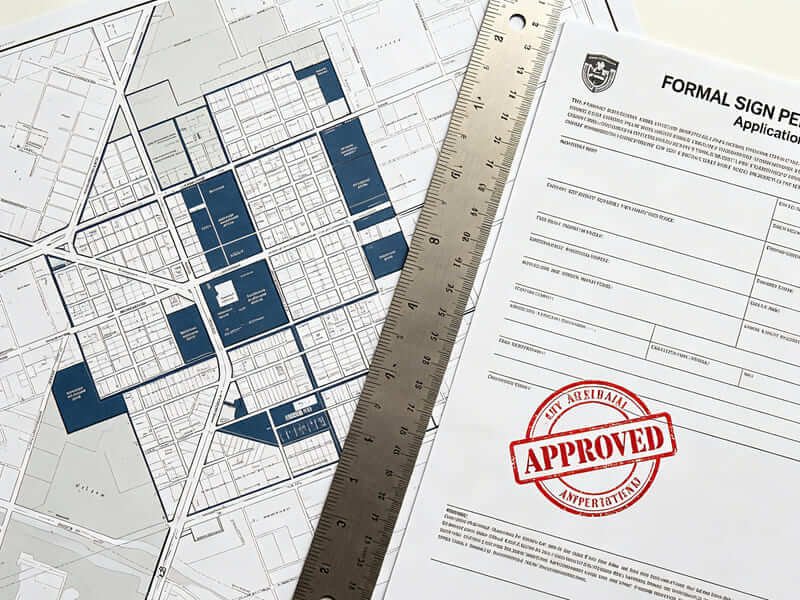
One of the most complex parts of installing a freestanding sign is navigating the legal landscape. Every city has a “Sign Ordinance” or “Unified Development Code (UDC)” that treats signs as part of the public infrastructure. You cannot simply build what you want; you must build what is allowed. Prohibited signs often include “air dancers,” feather flags, and roof signs, as these are considered visual clutter that can lower property values and distract drivers. For example, the Custom Signage Factory always advises clients to check if their city allows “moving” or “portable” signs, as many (like Arlington, TX) strictly ban them.
The Critical “Vision Triangle”
The most important safety rule you will encounter is the Vision Clearance Triangle. This is a 10-foot by 10-foot triangular area at the corner of any intersection or driveway. To ensure drivers can see oncoming cars and pedestrians, most cities prohibit any freestanding sign over 3 feet tall from being placed in this zone. If your proposed monument sign is 6 feet tall, it must be set back behind this triangle. This is not just a suggestion—it is a vital safety standard that protects your business from liability.
Understanding Setbacks and Area Limits
Zoning codes also regulate “Setbacks,” which is the minimum distance your sign must be from the property line. Usually, this is 5 feet. Furthermore, the total “Sign Area” you are allowed is often tied to your “Road Frontage.” If your property has 100 feet of road frontage, the city might allow you 75 square feet of signage. If you have multiple tenants, you may have to divide this total area among all the businesses on the property. This is why multi-tenant pylon signs require careful planning to ensure every logo is large enough to be legible.
8. Strategic Placement: The “Decision Point” Analysis
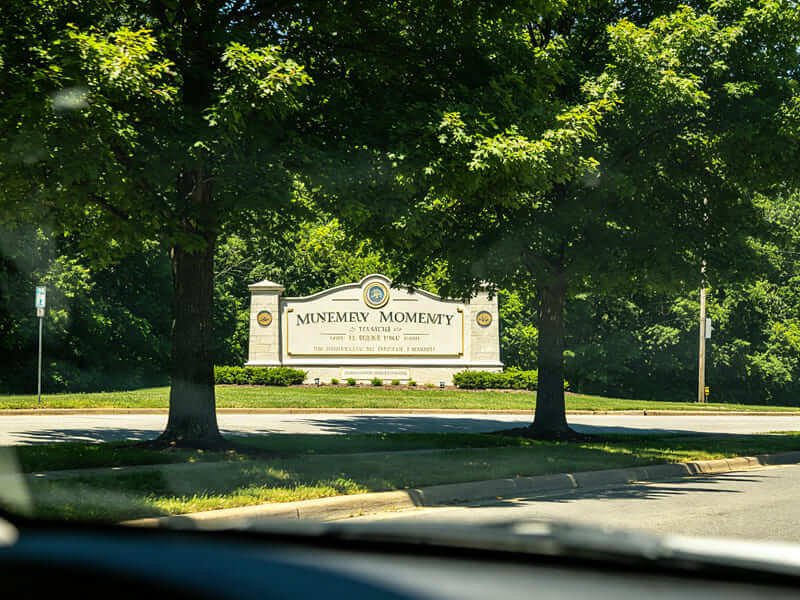
A freestanding sign’s success is determined by its “Decision Point.” This is the physical location on the road where a driver must see your sign to have enough time to signal, slow down, and turn into your driveway. If your sign is placed too close to your entrance, drivers will see it too late and simply keep going. If it is placed too far away, they might forget your location before they reach the turn. Professional placement strategy involves measuring the speed of traffic and the “viewing window” of your site.
The 3-Second Rule: In the signage world, a driver should be able to see and read your sign for at least 3 seconds before they need to make a move. If the speed limit is 45 mph, a car travels about 66 feet per second. This means your sign must be visible from at least 200 feet away. If there are trees or other signs in the way, your Custom Signage Factory expert might recommend a taller pylon sign to clear those obstacles, or a monument sign with high-contrast colors to stand out against the background.
| Speed Limit (MPH) | Feet per Second | 3-Second Distance (Feet) | Placement Tip |
|---|---|---|---|
| 25 MPH | 37 ft/sec | 111 ft | Place at eye-level near sidewalk |
| 40 MPH | 59 ft/sec | 177 ft | Ensure no parked cars block the view |
| 55 MPH | 81 ft/sec | 243 ft | Requires tall pylon or large monument |
9. Powering Up: The Electrical Preparation Roadmap
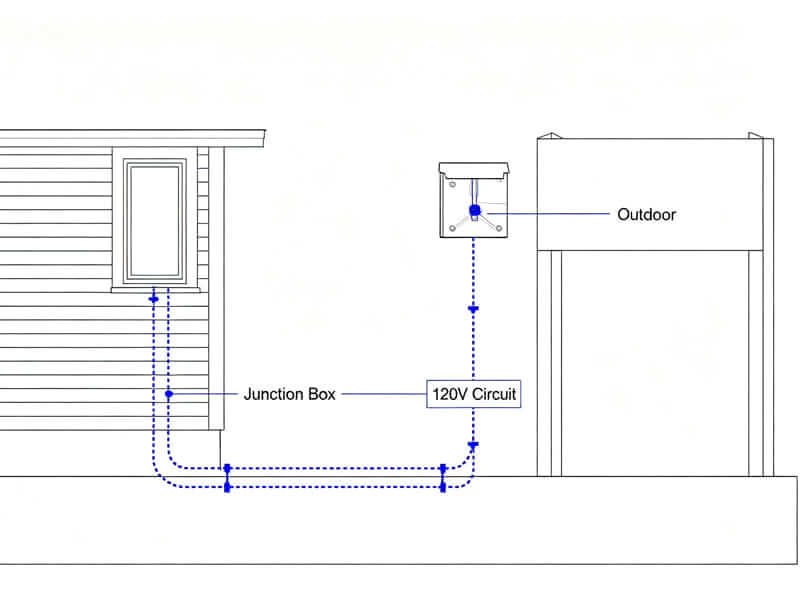
One of the biggest causes of delay in a sign project is electrical readiness. As a business owner, you must understand the “division of labor.” Your sign manufacturer (like Custom Signage Factory) usually holds a C-45 license, which means they can install the sign and make the final connections. However, they are not allowed to “build the road”—meaning they cannot run the primary power lines through your parking lot. For that, you need a local electrician with a C-10 license.
The Rough-In Process: Your electrician must run a dedicated 120V, 20-amp circuit from your building’s main electrical panel to the exact spot where the sign will stand. They must leave a “Junction Box” (J-Box) within 5 feet of the sign. Why a dedicated circuit? If the sign shares power with other equipment, like an irrigation pump or outdoor outlets, it can cause the sign to flicker or trip the breaker. To meet modern energy standards (like California’s Title 24), your electrician should also install an Astronomical Timer. This device uses your GPS coordinates to automatically adjust the sign’s “on” and “off” times based on the actual sunset and sunrise every day, saving you money on electricity.
10. The Buying Roadmap: From Factory to Field
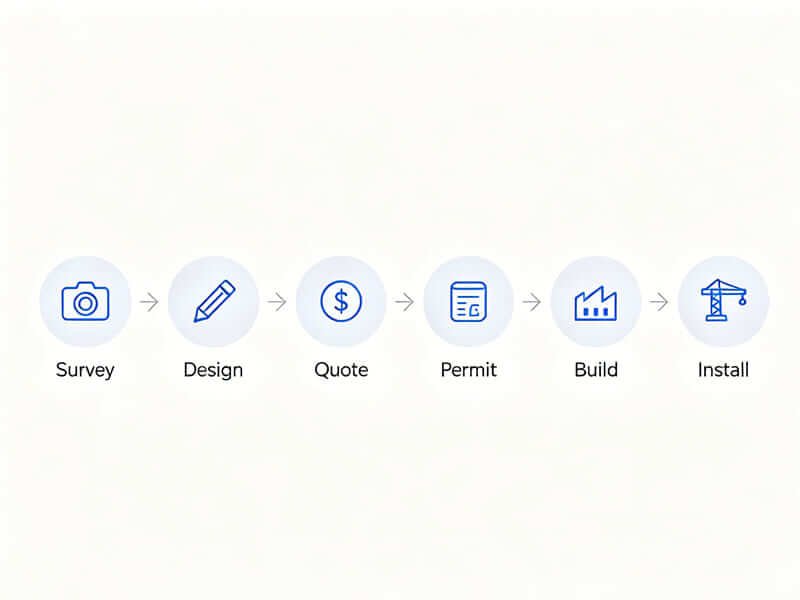
Buying a freestanding sign is a high-stakes investment. At the Custom Signage Factory, we treat every sign as a long-term infrastructure project. The process usually follows these six distinct steps:
- Site Survey & Assessment: We visit your property to look for underground utilities and measure the road frontage. We identify “dead zones” where a sign might be hidden.
- Architectural Design: Our designers create “shop drawings” that show exactly how the sign will look against your building. We choose materials that will last 20+ years.
- Permit Acquisition: This is the most time-consuming part. We submit the engineering plans to the city planners and wait for their official approval.
- Precision Fabrication: Once approved, the sign is built in our factory. We use CNC routers for perfect cuts and automotive-grade paint for a finish that won’t fade in the sun.
- Foundation & Steel: While the sign is being painted, a crew digs the foundation, sets the steel anchor bolts, and pours the concrete.
- Installation & Commissioning: Finally, a crane truck lifts the sign into place. We make the electrical connections and test the timers or digital screens.
11. Maintenance and Long-Term Performance

Even the best-built sign needs care. Over time, dust, salt, and bird droppings can dull the finish of your monument or pylon sign. A simple annual cleaning with mild soapy water and a soft cloth can keep the paint looking vibrant for decades. If you have an older sign that uses fluorescent bulbs, you should consider an LED Retrofit. This is a process where the Custom Signage Factory removes the old, flickering tubes and replaces them with modern LED modules. This can reduce your energy bill by up to 70% and eliminate the need for frequent bulb changes.
“An annual inspection catch small problems—like a loose seal or a clogged drainage hole—before they turn into expensive repairs.”
Frequently Asked Questions
1. What is the typical lifespan of a freestanding sign?
When built by a professional factory using aluminum and automotive-grade paint, a freestanding sign can easily last 20 to 30 years. The LED lights inside are usually rated for 100,000 hours, which is about 11 years of continuous nighttime use.
2. Can I install a sign on a utility easement?
Generally, no. Most cities prohibit permanent signs on easements (areas reserved for water or power lines) without special written consent. Always check your property survey before choosing a location.
3. Do monument signs require a foundation?
Yes. Because of their weight and wind-load, monument signs require a concrete pad or “pier” foundation. In colder climates, this foundation must go below the frost line (usually 36-48 inches) to prevent “frost heave.”
4. Why does my city limit the size of my sign?
City codes limit sign size to prevent “visual clutter” and ensure that signs remain proportionate to the buildings they identify. These rules help maintain property values and community aesthetics.
5. Can I put my phone number on a roadside sign?
Only if it is very large and easy to read. Most experts recommend focusing on your business name and logo. In a phone-first world, people will search for your name online once they see your sign; they rarely remember a 10-digit number while driving.
6. What is “Nits” in digital signs?
A “Nit” is a unit of measurement for brightness. For a digital sign to be visible in direct sunlight, it needs at least 5,000 Nits. For nighttime use, it should dim to around 500 Nits to follow safety codes.
7. What material is best for an outdoor sign face?
Polycarbonate (Lexan) is the best choice for pylon and monument sign faces because it is extremely impact-resistant and won’t crack if hit by debris or hail, unlike standard acrylic.
8. How much time should I allow for a sign project?
A typical project takes 8 to 12 weeks. Most of that time is spent waiting for city permits and performing structural engineering. The actual factory production usually takes about 3 to 4 weeks.
Conclusion: Investing in Your Business’s Physical Presence
In a world dominated by digital ads and social media, the physical presence of your business still matters more than ever. A freestanding sign is your first handshake with the community. It is a bold statement that your business is established, professional, and here to stay. Throughout this guide, we have explored the taxonomy of signs, the critical importance of visibility science, the necessity of structural engineering, and the roadmap for successful buying and maintenance.
When you invest in high-quality signage, you are not just buying a piece of metal and plastic; you are building a landmark. By following the standards for contrast, legibility, and compliance, you ensure that every person who drives by becomes a potential customer. Whether it is a soaring highway pylon or a sophisticated stone monument, your sign is the most powerful marketing tool you own.