1. Defining the Trimless Aesthetic: Why “Less” is Truly “More”
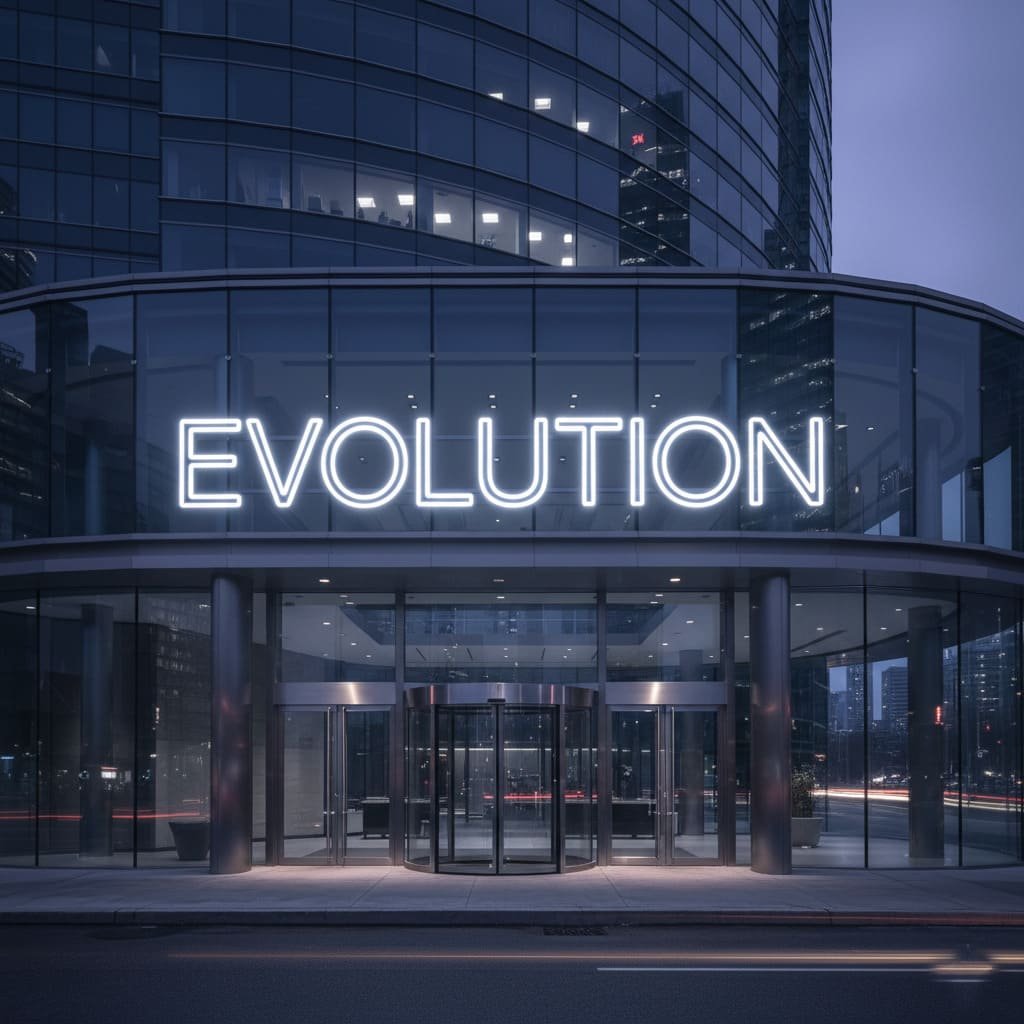
In the traditional world of signage, channel letters have always been built with a “trim cap.” The trim cap is essentially a plastic rim that frames the front face of the letter and attaches it to the metal sides, or returns. While this method has served the industry for decades, it comes with a set of visual and structural limitations. The trim cap creates a visible border that can break up the lines of a logo and make a sign look “framed” or heavy. In contrast, trimless channel letters are manufactured without this visible plastic cap. This creates a seamless transition from the letter face to the return, resulting in a minimalist and clean-cut approach that heightens visual appeal through sheer simplicity.
The difference might seem subtle at first glance, but the impact on overall branding is significant. Trimless letters offer a more sophisticated appearance, elevating the visual appeal of a storefront to match modern architectural trends. This choice allows for greater creative freedom, as designers are no longer restricted by the limited colors and widths of traditional trim caps. Instead, the focus is entirely on the customized lettering or logo, allowing for a bolder statement that resonates with customers on a deeper level. Whether it’s a high-end retail boutique or a tech startup’s corporate lobby, the trimless look conveys a sense of elegance and attention to detail that is hard to replicate with traditional methods.
“Trimless channel letters have revolutionized the world of illuminated signage by offering a sleek and modern alternative that pushes boundaries and redefines what is possible in LED displays.”
Furthermore, the absence of a visible border allows the LED light inside the letter to reach the absolute edge of the face. In a trimmed letter, the plastic cap often blocks a small portion of the light at the rim, creating a slight “shadow” or framed effect. In a trimless letter, the illumination is edge-to-edge. This makes the letters appear crisper and more legible from a distance, especially during the night when visibility is most crucial. For businesses located in crowded marketplaces or on busy city streets, this extra bit of visibility can be the difference between being noticed and being overlooked.
| Aesthetic Comparison: Trimmed vs. Trimless Structures | ||
|---|---|---|
| Design Element | Standard Trimmed Letter | Modern Trimless Letter |
| Edge Transition | Abrupt; separated by a 1-inch plastic border | Seamless; smooth metal-to-acrylic joint |
| Visual Weight | Heavier, more traditional appearance | Lightweight, “floating” futuristic look |
| Light Output | Bordered light; slight shadowing at edges | Maximum edge-to-edge illumination visibility |
| Detail Preservation | Small points can be rounded off by the cap | Maintains sharp angles and fine script details |
2. Anatomy of Excellence: The Components of a Trimless Sign
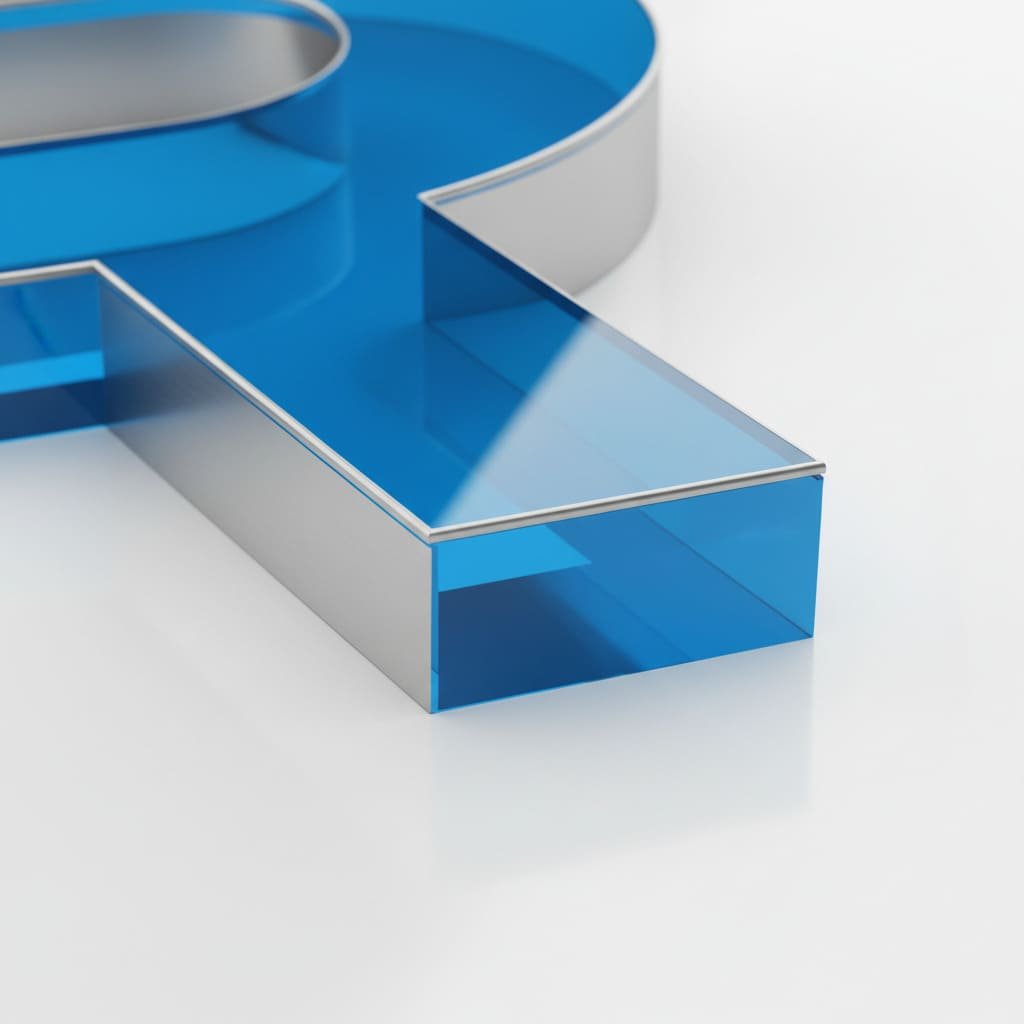
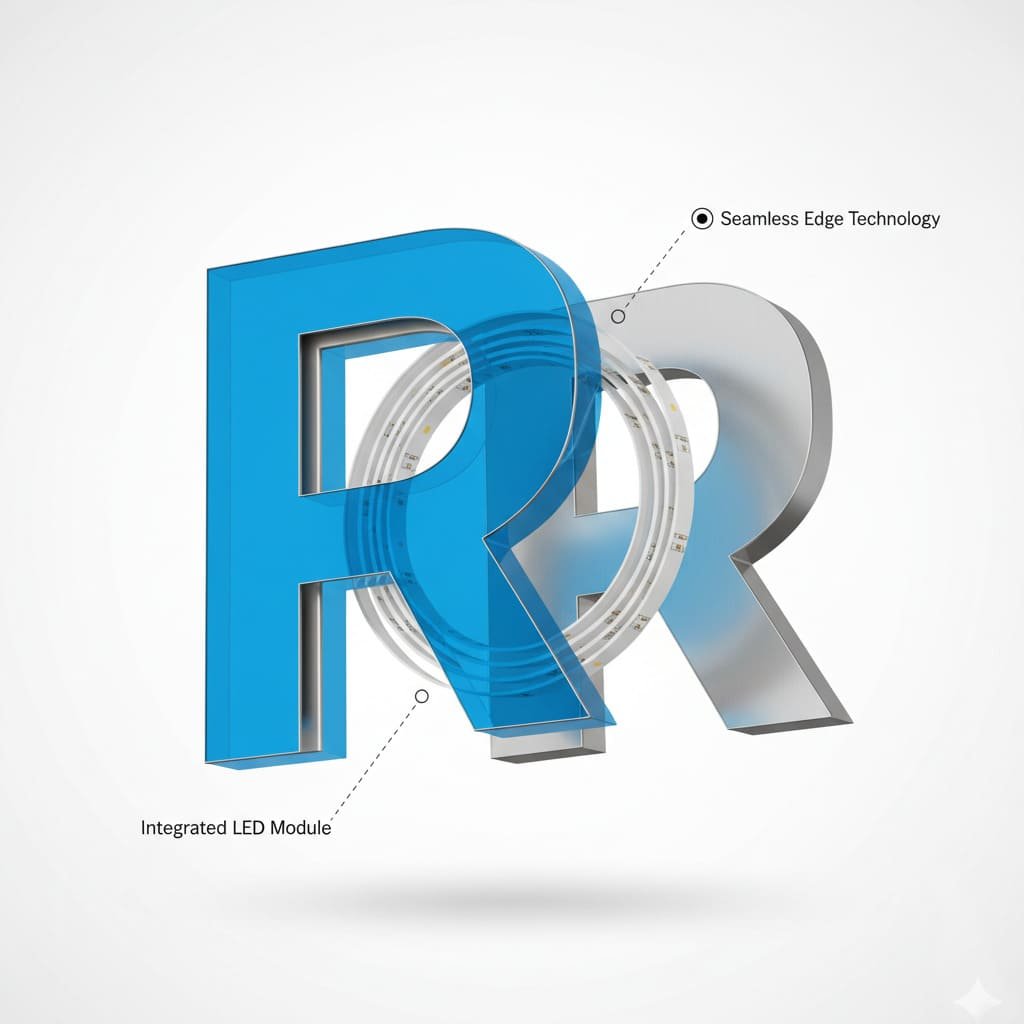
To truly appreciate how a trimless channel letter functions, we must examine its internal and external components. Because there is no trim cap to hide imperfections or gaps, each piece of the letter must be manufactured to much tighter tolerances than a standard sign. The engineering of a trimless letter is a balance of structural integrity and visual purity. Each component plays a vital role in ensuring the sign remains stable, weather-resistant, and brilliantly lit for years to come.
The Acrylic Face: The Canvas of the Sign
The face is the front and center of the letter—the part that displays the color and the brand’s identity. In trimless letters, the face is typically crafted from high-grade acrylic sheets. These can be clear, translucent, or opaque depending on the desired lighting effect. Because there is no border, the acrylic must be cut with surgical precision. Most modern fabricators use CNC routers or laser acrylic cutting machines to ensure that the face matches the design specifications down to the millimeter. This precision is what allows the face to sit perfectly flush against the metal returns.
The Returns: The Structural Backbone
The “returns” are the sidewalls that give the letters their three-dimensional depth. In the world of trimless signage, these are almost exclusively made from durable metals like aluminum. Aluminum is favored because it is lightweight, rust-proof, and can be easily shaped by automated machines. The returns are the most critical part of the structure, as they must be bent into perfect curves or sharp angles to follow the exact path of the acrylic face. When the returns are formed correctly, they provide the rigid framework that supports the entire letter.
The Back: Stability from the Rear
The back of each letter closes the structure and provides the mounting surface for the internal electronics. Like the returns, the back is often made from aluminum, which offers a strong and weather-resistant solution. These backings help to reinforce the structure and serve as a heat sink for the LED modules. In many trimless designs, the back is secured tightly to the returns using advanced fastening techniques like self-piercing rivets or press-forming, which eliminates the need for unsightly screws or bolts on the visible surfaces of the sign.
The Illumination: High-Efficiency LED Modules
A sign is only as good as its light. Modern trimless letters utilize energy-efficient LED lighting. LEDs are chosen because they consume significantly less power than traditional neon or fluorescent lights, and they last much longer—often up to 50,000 hours or more. Because the internal space of a channel letter can be tight, small LED modules are used to provide an even, bright glow. Companies like GOQ LED America provide modules that are weather-protected and durable, ensuring that the sign remains bright and beautiful through rain, snow, and heat.
| Material Properties and Usage in Trimless Fabrication | ||
|---|---|---|
| Component | Primary Material | Why It Is Used |
| Face | Optically Clear Acrylic | UV resistance and uniform light diffusion |
| Return | Aluminum Coil (0.032″ – 0.063″) | Lightweight strength and ease of bending |
| Back Plate | Pre-painted Aluminum | Internal reflection and mounting stability |
| Fasteners | Self-piercing Rivets | Fastens material without pre-drilling holes |
 。
。3. The Art of the Build: How Trimless Channel Letters Are Made
The creation of a trimless channel letter is a multi-step process that combines digital precision with high-tech craftsmanship. Unlike traditional sign making, which often relied on manual labor and “eye-balling” measurements, trimless fabrication is a science of automation. Every step in the workflow is designed to minimize human error and ensure a tight, seamless assembly that meets the highest standards of aesthetics and quality. Let’s walk through the four-step workflow that has been refined over decades by industry pioneers like Computerized Cutters.
Step 1: Digital Design and Machine Planning
The journey begins on a computer. A graphic designer takes the client’s logo or typography and converts it into a vector format that the fabrication machines can read. This isn’t just a simple drawing; it includes the precise paths for cutting and the exact points where the metal should be notched or bent. Because trimless letters have no “border” to hide imperfections, the tolerance levels in the design phase are extremely tight. The software must account for the thickness of the acrylic and the metal coil to ensure a perfect fit later in the assembly.
Step 2: Precision Bending of the Returns
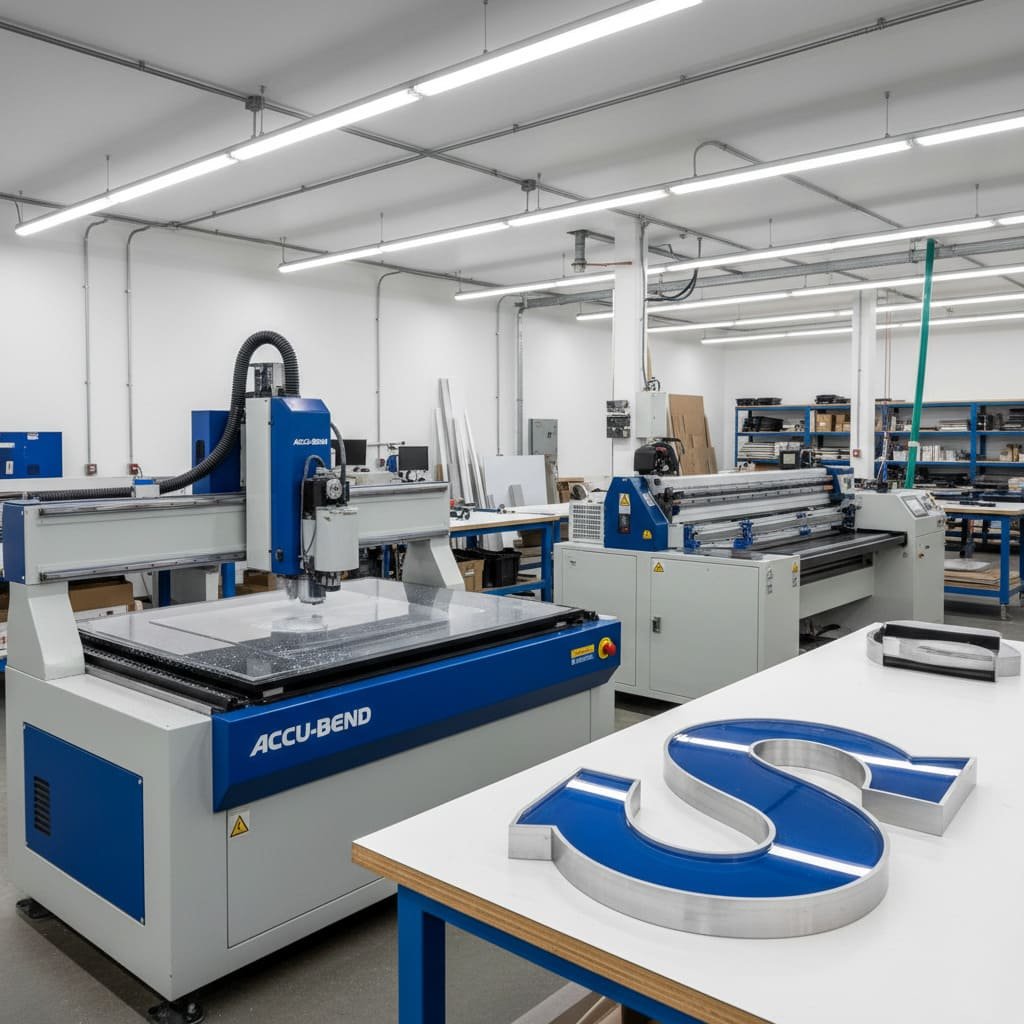
The creation of the side walls, or returns, is handled by an automated channel letter bender, such as the Accu-Bend machine. The machine feeds standard aluminum coils—ranging from 0.032” to 0.063” in thickness—and uses a series of bending arms and notching mechanisms to form the three-dimensional shape of the letter. These machines are capable of producing highly complex shapes with repeatable accuracy. By accurately notching and flanging the metal, the machine ensures that the return will perfectly fit the letter face without any gaps. This automation relieves the sign shop of labor-intensive tasks while delivering a superior level of structural integrity.
Step 3: High-Accuracy Cutting of the Face
While the returns are being bent, a CNC router table like the Accu-Cut XLR8 is used to produce the acrylic faces. In a trimless design, the face must fit directly into the internal dimensions of the metal return. The Accu-Cut XLR8 is engineered to deliver a cutting accuracy of approximately ±0.003 inches. This precision is what allows the face to be “snap-fitted” into the returns. If the face were even a fraction of an inch too large or too small, the trimless effect would be ruined by light leaks or visible gaps. The combined capabilities of the bending and cutting machines allow even the most intricate script designs to be produced flawlessly.
Step 4: Advanced Assembly and Bonding
Once the components are cut and bent, they must be joined. In trimless letters, this is often done using high-strength adhesives or specialized screws. Some manufacturers use handheld laser welders to fuse the returns and face together, creating a permanent bond that maintains the sleek look. Following the face attachment, the internal LED lighting is installed. The final step is adding the aluminum back plate, which is often secured using a press-form method (like the Accu-Clinch) or self-piercing rivets. This four-step workflow results in a finished channel letter that is ready for use within minutes, showcasing decades of automated production mastery.
| The Four-Step Workflow Efficiency Comparison | ||
|---|---|---|
| Step | Manual Fabrication Time | Automated Fabrication Time |
| 1. Design | 60+ mins (Paper templates) | 15 mins (Vector CAD) |
| 2. Bending | 120+ mins (By hand) | 5-10 mins (Accu-Bend) |
| 3. Cutting | 45 mins (Hand saw/routing) | 5 mins (Accu-Cut XLR8) |
| 4. Assembly | 90 mins (Trim-cap gluing) | 20 mins (Fastening/Bonding) |
4. A Legacy of Pioneering Automation: 25 Years of Mastery
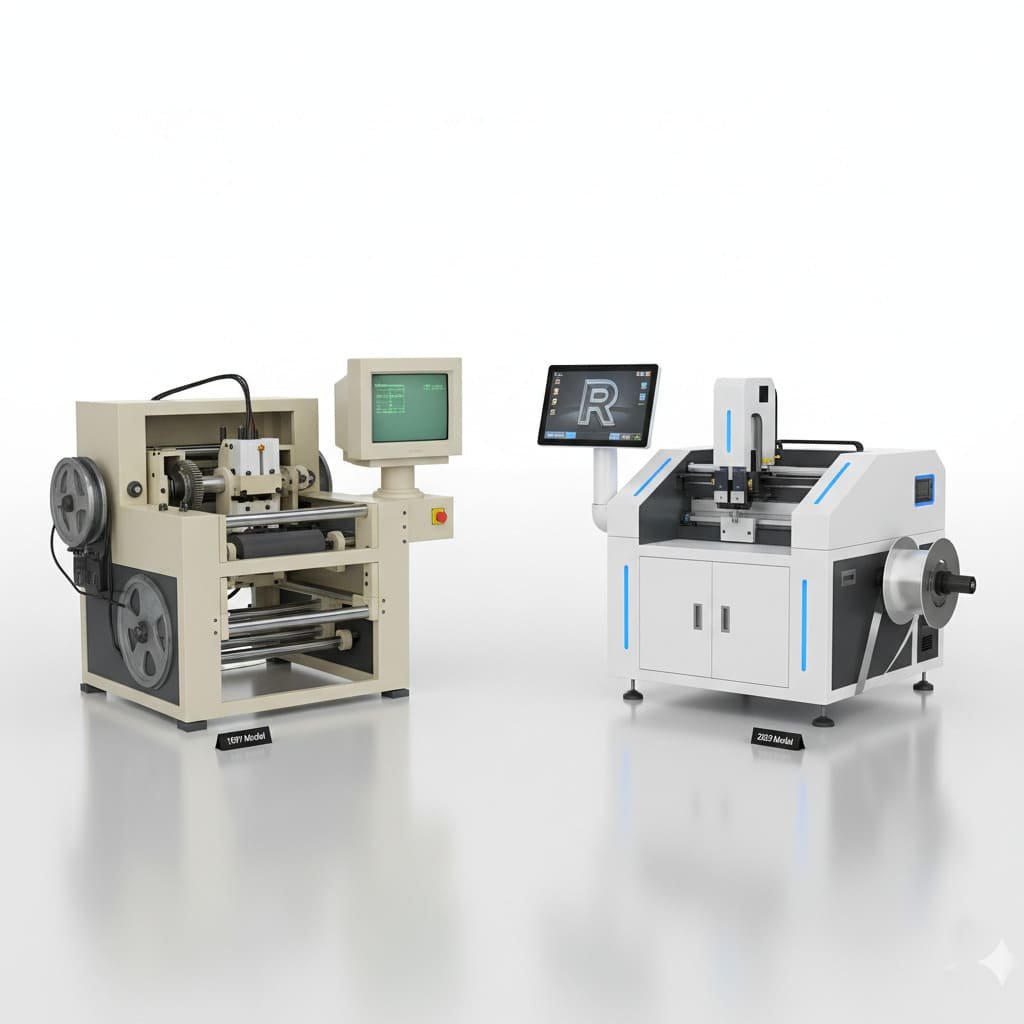
The shift toward trimless channel letters is not just a passing trend; it is the culmination of over two decades of technological evolution. In 1997, the sign industry was transformed by the introduction of the first computerized channel letter bending machine. Since then, manufacturers like Computerized Cutters have pushed the boundaries of what is possible, moving from manually crafted metal returns to a highly automated process. This history of innovation has provided sign shops with the tools needed to move toward one-piece, seamless designs that meet the modern market’s demand for quality and efficiency.
The Accu-Bend technology, for instance, has evolved from basic bending to a sophisticated system featuring dual-bending arms and advanced notching mechanisms. These machines are not just about speed; they are about consistency. In a sign with dozens of letters, every single ‘E’ must look identical to every other ‘E’. Automation ensures that the metal returns are repeatable and precise, providing the perfect foundation for a trimless fit. By leveraging these machines, sign fabricators can reduce production time dramatically while significantly lowering material costs by eliminating the need for expensive plastic trim cap components.
Furthermore, the integration of CNC router tables into the production line has been a game-changer. When the bending machine and the router table work in synergy, tolerance issues that once challenged traditional methods are minimized. Sign shops can now manage high volumes and tight deadlines with confidence, knowing that their machines will deliver signs that are as durable as they are beautiful. This legacy of mastery has set a inspiring benchmark for the industry, allowing for the production of everything from small, intricate indoor letters to large-scale outdoor signage that can withstand the harshest environmental conditions.
5. The Practical Advantages: Durability, Maintenance, and Long-Term Value
While the aesthetic appeal of trimless channel letters is undeniable, the practical benefits are equally compelling. Many business owners are initially drawn to the look of a seamless sign, but they choose to invest because of the durability and ease of upkeep. Traditional trim cap letters come with several inherent challenges that can lead to higher costs over the life of the sign. These include the difficulty of painting a trim cap a custom color, the risk of water being funneled down inside the letter face, and the overall shorter longevity of plastic components in harsh outdoor environments.
Eliminating the Failure Points of Plastic Trim
In traditional signs, the trim cap is often the first part to fail. Because it is made of plastic, it is susceptible to UV degradation from the sun, which causes it to become brittle, crack, or fade over time. When a trim cap cracks, it allows moisture to enter the letter, which can short-circuit the LEDs or lead to rust on the internal backing. Trimless channel letters, by removing the trim cap entirely, eliminate this primary failure point. The seamless joint between the metal and acrylic is much more resistant to weather and wear, leading to a sign that looks brand new for a much longer period.
Simplified Cleaning and Maintenance
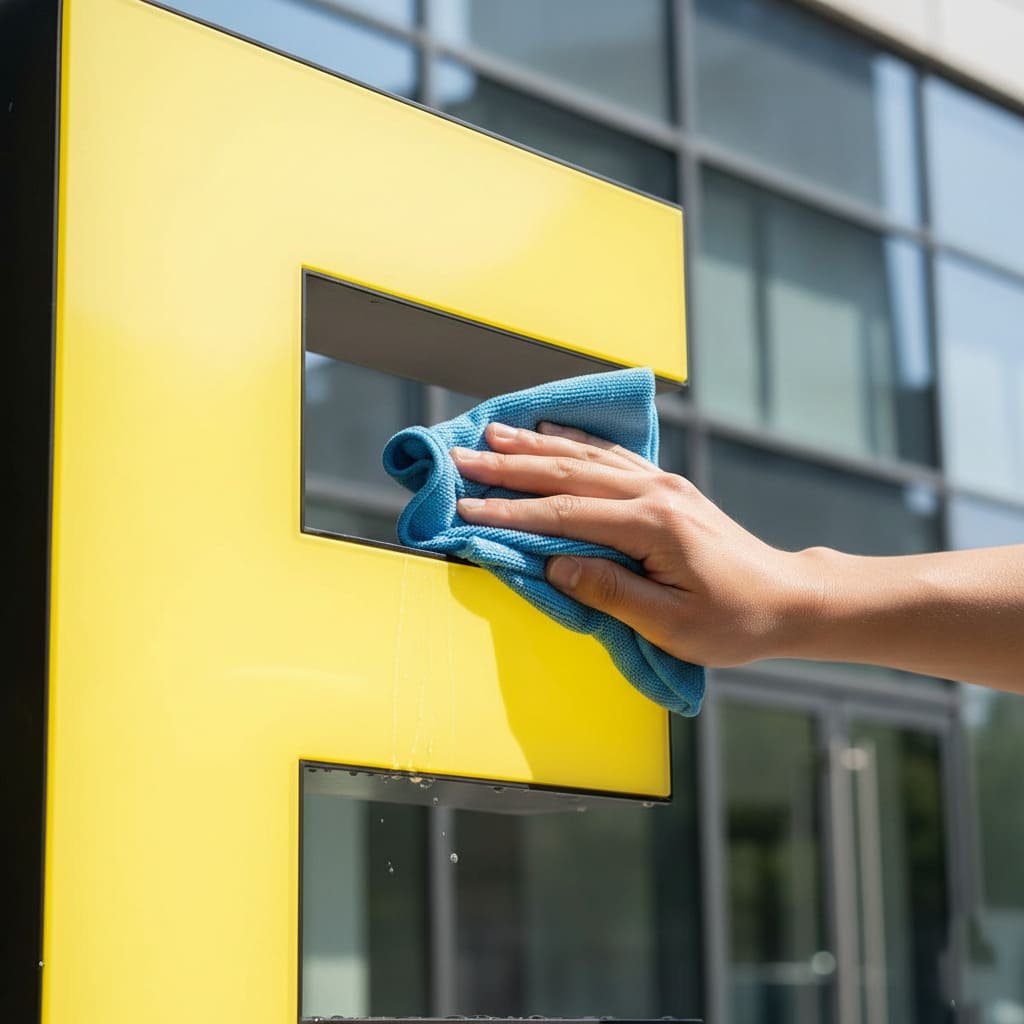
Maintenance is another area where trimless letters shine. Their streamlined design features modular components that can be easily repaired or replaced without specialized tools. For example, many trimless signs use screw-mounted removable faces. If an LED needs to be serviced after many years of use, the face can be removed for servicing without having to disassemble the entire sign. Furthermore, the minimalistic design reduces the risk of dust buildup, water spots, and debris that can affect the appearance and functionality of traditional signage. This makes them not only easier to clean but also less prone to long-term damage.
Improved Energy Efficiency and Environmental Impact
Thanks to the standard use of LED lighting, trimless channel letters are an eco-friendly choice for modern businesses. LEDs use less energy, emit less heat, and last longer than any other lighting technology. When combined with the high durability of the metal-and-acrylic trimless structure, these signs have a much lower total environmental footprint. They require fewer replacements and use less power over their lifetime, making them a sustainable choice that appeals to environmentally conscious consumers and reduces the business’s carbon footprint.
| Durability and Maintenance Comparison Over 10 Years | ||
|---|---|---|
| Maintenance Issue | Trimmed Channel Letters | Trimless Channel Letters |
| UV Discoloration | High; plastic trim caps yellow and fade | Negligible; metal and high-grade acrylic stay crisp |
| Water Intrusion | Risk of “funneling” water through trim gaps | Low; seamless bonds repel moisture |
| Cracking Risk | Plastic trim becomes brittle in cold weather | Extremely low; metal returns are structurally rigid |
| Repair Complexity | Requires expertise to replace trim cap bands | Simple; modular faces can be removed for service |
6. Strategic Selection: When and When Not to Use Trimless
Choosing the right signage for your business depends on a few key factors, including your brand’s personality, your budget, and the physical location of the sign. While trimless letters offer many advantages, they are a specialized product that is best suited for certain environments. Understanding when to use them—and when a traditional sign might actually be better—will help you deliver the best value for your investment.
Ideal Applications for Trimless Signage
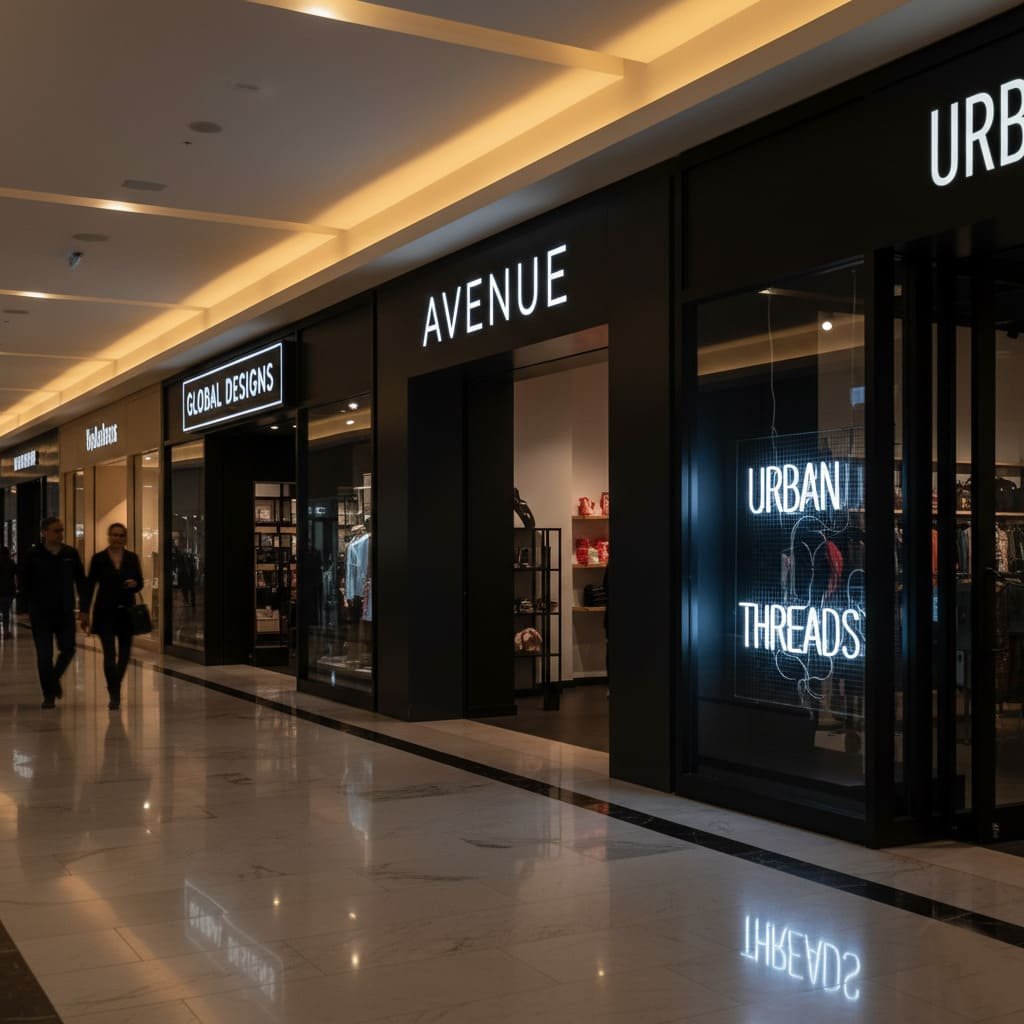
Trimless channel letters are particularly effective for “architectural” signage—those signs that are viewed up close or from multiple angles. This includes indoor spaces, high-end retail storefronts, malls, and monument signs. Because these signs are often seen from just a few feet away, the clean lines and absence of bulky trim are very apparent and add a layer of prestige to the business. They are also the perfect choice for signs with sharp points or fine script details that a traditional trim cap might obscure or round off. If your brand is sleek, modern, and high-tech, trimless is the logical fit.
When Traditional Trim Cap May Be Preferable
There are some cases where trimless letters might not be the best choice. For extremely large channel letters—those greater than 48 inches tall—traditional methods are often more practical. Large signs placed high on top of buildings require extra structural support, such as metal retainers, to handle extreme wind loads. At that distance, the visual benefit of being “trimless” is lost on the viewer, and the extra cost of trimless fabrication isn’t always justified. Additionally, if a client is prioritizing the absolute cheapest and fastest option, traditional trimmed letters remain the industry’s “quick and easy” solution. Finally, some branding guidelines may specifically require a trim cap border to maintain a consistent look across a national franchise.
Three Categories of Trimless Fabrication
If you decide to go trimless, you should be aware that there are three main categories of fabrication most often requested:
- Screw-Mounted Removable Acrylic Faces: This approach allows the faces to be removed for easy maintenance of the LEDs. It is the most popular choice for retail and commercial signage.
- Adhesive-Sealed Faces with Removable Backs: This creates a permanently sealed front for maximum weather resistance, with all servicing done through the rear of the letter.
- Specialty Methods: This includes high-end options like acrylic blocks, 3D-printed letters, or resin-poured faces, used for unique architectural designs that require a solid, crystal-like glow.
Frequently Asked Questions (FAQ)
1. What materials are used to make trimless channel letters?
Trimless channel letters are primarily constructed from three core materials: high-grade acrylic for the face, aluminum for the returns and backing plates, and energy-efficient LED modules for internal illumination. These materials are chosen for their durability, light weight, and resistance to outdoor weather conditions.
2. Are trimless channel letters more expensive than traditional signs?
Yes, the upfront cost of trimless signage is typically higher than traditional trim cap letters. This is because trimless fabrication requires higher-precision machinery (like CNC routers with ±0.003″ accuracy) and specialized assembly labor. However, because they are more durable and easier to maintain, they often have a lower total cost of ownership over several years.
3. Can I use trimless channel letters for an outdoor storefront?
Absolutely! Trimless channel letters are designed to be weather-resistant and are a perfect choice for outdoor signage. Their seamless construction actually reduces the risk of water intrusion and environmental damage compared to traditional signs that use plastic trim bands.
4. How long do trimless channel letters last compared to trimmed signs?
With proper maintenance and high-quality LEDs, a trimless sign can last 10 years or more. Because they eliminate the plastic trim cap—the part most likely to fail due to sun and temperature changes—they typically maintain their “like-new” appearance much longer than traditional signs.
5. What is the “sweet spot” size for a trimless sign?
The ideal size for trimless letters is between 6 inches and 28 inches tall. In this range, the detail and clean aesthetic are most noticeable to customers. While they can be made larger, signs over 48 inches often require traditional retainers for structural safety in high winds.
6. Is it difficult to change the lights if an LED fails?
No, it is actually quite simple. Most trimless letters are designed with removable faces or backs. A technician can quickly remove a few hidden screws, swap out the LED module, and reattach the face in a matter of minutes, ensuring your brand stays lit with minimal downtime.
Conclusion: Leading Your Brand into the Future
As we have explored in this ultimate guide, trimless channel letters represent much more than just a passing fashion in the world of graphic design. They are the result of over 25 years of mastery in automation, combining the precision of the Accu-Bend and Accu-Cut systems to create a product that is as durable as it is beautiful. By removing the traditional plastic border, businesses can achieve a sleek, minimalist aesthetic that enhances visibility and reflects a commitment to quality. Whether you are aiming for a floating, futuristic glow or a clean architectural finish, trimless signage offers a versatile and modern solution that sets your brand apart from the competition.
Investing in trimless channel letters means prioritizing both form and function. You gain a sign that is easier to clean, more resistant to the elements, and brilliantly illuminated from edge to edge. It is an investment that pays off through lower maintenance costs and a professional appearance that captures the attention of every passerby. In an increasingly competitive marketplace, these subtle design details can make a profound impact on how customers perceive your business. Choosing trimless is choosing to stay ahead of the curve, embracing innovation and excellence in every facet of your brand identity.
We believe that every business deserves a sign that reflects its unique spirit and high standards. Our team is dedicated to providing the high-precision machinery and expertise required to bring your vision to life with perfect accuracy. If you are ready to elevate your storefront with the most modern, sleek, and durable signage available today, we are here to help. Together, we can create a lasting impression that shines brightly for years to come.