Moving Beyond the Logo: Signage as a Storytelling Medium
A global hotel chain uses signage for one primary reason: uniformity. A guest should see the same sign in Paris as they do in Portland. But a boutique hotel’s goal is the exact opposite. Your signage is your chance to shout your individuality from the rooftops (or, more likely, whisper it elegantly down the hallways).
Three Pillars of Boutique Hotel Signage
- Authenticity: Your signs must feel true to your hotel’s core concept. Are you a restored historic landmark? A minimalist urban retreat? A bohemian beach house? Your signage materials, fonts, and style must echo that identity.
- Curation: Every sign should feel as intentionally chosen as the art on the walls or the linens on the bed. It’s not just a sign; it’s a curated piece of your design narrative.
- Experience: Ultimately, your signage exists to enhance the guest experience. It should reduce friction (no one likes feeling lost), build a unique atmosphere, and create delightful “Instagrammable moments” that guests will remember and share.
The Brand Narrative: Defining Your Signage’s Voice
Before you even think about design, you must define the story you want your signs to tell. This begins with understanding your hotel’s unique personality. Are you trying to make guests feel relaxed, inspired, pampered, or adventurous? The answer will guide every choice you make.
- If your hotel is “Industrial Glamour,” you might lean towards materials like brushed brass, dark steel, and polished concrete, with elegant, clean fonts.
- If your theme is “Coastal Serenity,” you’d likely choose light woods, frosted glass, and natural stone, with soft, flowing typography.
- For a “Historic Elegance” brand, classic serif fonts, carved wood, and aged metals would perfectly capture the desired feeling.
Creating a visual mood board with textures, colors, and font styles that reflect your brand is a critical first step before engaging with a design team. It ensures your vision is clear from the start.
The Guest Journey: Signage at Every Step
Let’s walk through your hotel from a guest’s perspective, identifying the crucial signage touchpoints that shape their experience from arrival to departure.
Chapter 1: The Art of Arrival — Exterior Signage
The exterior sign is your hotel’s visual handshake. It’s the first physical promise of the experience that awaits inside, setting the tone long before the guest reaches the front door.
The “Hero” Identity Sign
This is your main event, the sign that acts as a landmark and makes a powerful first impression.
- Illuminated Channel Letters: A classic and highly professional choice. You can customize the finish—think matte black, brushed bronze, or a custom brand color—to elevate the look.
- Monument Signs: Perfect for properties with a driveway or a grand entrance set back from the road. The materials should complement the building’s architecture, using elements like stone, brick, or modern steel.
- Projecting Blade Signs: An ideal choice for urban hotels on pedestrian-heavy streets. They add a touch of classic, boutique charm and are highly visible to foot traffic.
Secondary Exterior Signage
These supporting signs guide guests seamlessly from the street to your entrance, ensuring the brand experience is never broken. Don’t let these be an afterthought. Custom-designed directional and parking signs that use the same fonts and materials as your main sign create a cohesive and high-end feel.
Chapter 2: The Welcome — Lobby & Reception Signage
The lobby is where your brand story truly comes to life. The signage here must be immersive, setting the stage and making guests feel they’ve arrived somewhere special.
The Reception Desk Masterpiece
This is the visual anchor of your entire lobby. It’s a major branding moment that confirms your identity.
- 3D Logos: A beautifully crafted logo in a tactile material like polished brass, copper, stainless steel, or carved wood makes a powerful statement.
- Halo-Lit Signs: By pushing light backward onto the wall, these signs create a sophisticated, ambient glow that feels luxurious and inviting.
- Custom Murals: A large-scale art piece that incorporates the hotel’s name can turn a simple wall into a memorable feature.
- Neon or LED Neon: For a more contemporary, playful, or retro brand, a custom neon script sign can add a vibrant splash of personality.
The Lobby’s Silent Concierge
These signs provide essential directions without cluttering the space. An elegant directory pointing to elevators, the restaurant, and restrooms can be etched into glass, metal, or wood. For a modern touch, a tastefully framed digital display can show curated local events or promotions, blending seamlessly with the decor.
Chapter 3: The Exploration — Wayfinding & Directional Signage
Effective wayfinding is the unsung hero of a positive guest experience. When it’s done well, guests don’t even notice it; they just feel at ease. When it’s done poorly, it’s a source of immense frustration. For a boutique hotel, wayfinding must be both intuitive and beautiful.
| Creative Wayfinding Ideas |
| Hallway & Floor Navigation |
Use subtle design changes for each floor, like different accent colors or icons. Consider integrating low-level lighting into directional signs or even inlaying brass letters into the floor at key intersections for a truly custom touch. |
| Amenity Signage (Spa, Gym, Bar) |
Tailor the sign’s material and style to the atmosphere of the space. A spa sign might use natural, serene materials like slate or frosted glass, while a lively bar could feature a bold, illuminated sign that hints at the experience within. |
Chapter 4: The Sanctuary — Guest Room & Door Signage
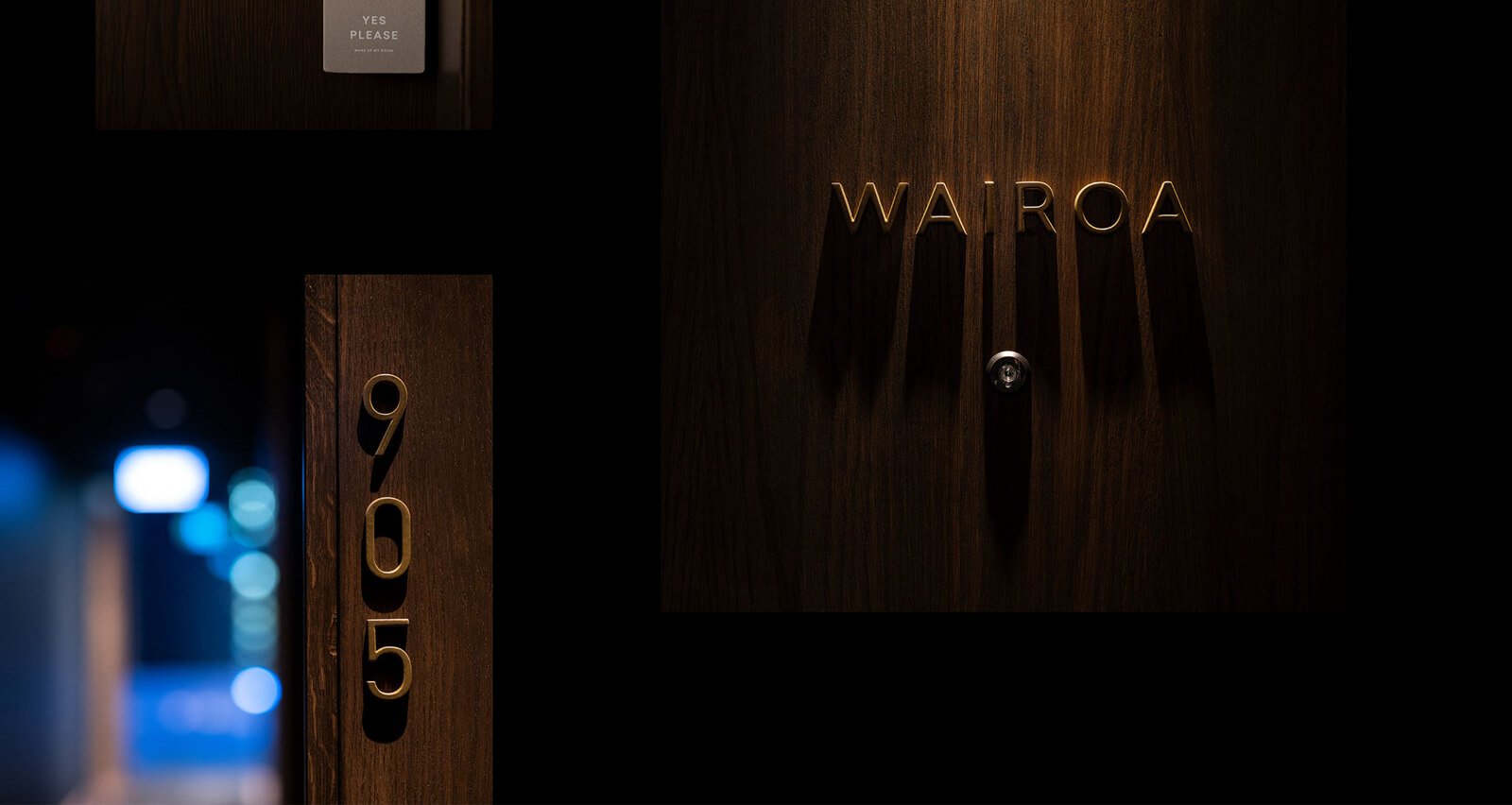
This is where your branding gets personal. Guests interact with these signs up close, so the details, materials, and tactile quality matter immensely.
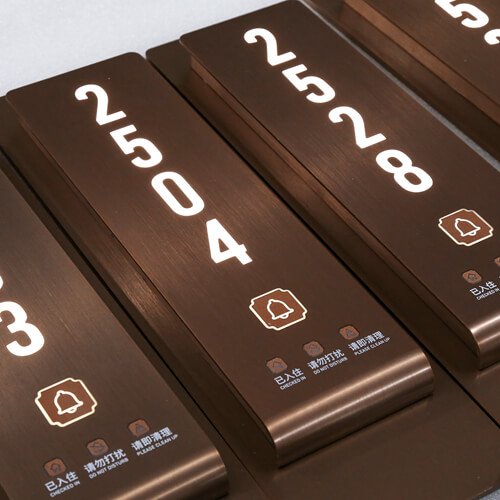
Room Number Plaques
Move beyond standard plaques. This is a chance for a truly unique expression of your brand.
- Custom Materials: Engrave numbers on locally sourced materials like polished river stones, reclaimed wood from a historic site, or custom ceramic tiles.
- Layered Design: Combine materials like wood and metal or acrylic and stone to create depth and visual interest.
- Unique “Do Not Disturb” Signs: Ditch the paper hangers for something memorable, like custom leather fobs, elegant wooden sliders, or small, decorative door knockers.
The Language of Materials: What Your Choices Say
The materials you choose for your signage are a core part of its non-verbal communication. They instantly convey a feeling and a level of quality.
| Material |
Conveys a Feeling of… |
Perfect for Brands That Are… |
| Brushed & Polished Metals (Brass, Steel) |
Luxury, Modernity, Professionalism |
Sleek, Urban, High-End, Industrial Chic |
| Natural & Reclaimed Wood (Oak, Walnut) |
Warmth, Authenticity, Nature, Rustic Charm |
Eco-Friendly, Cozy, Historic, Lodge-Style |
| Acrylic & Glass |
Cleanliness, Minimalism, Contemporary Style |
Modern, Tech-Forward, Spa & Wellness |
| Stone & Concrete (Slate, Marble) |
Earthiness, Strength, Permanence, Luxury |
Organic Modern, Minimalist, High-End Spa |
The Power of Light: Illumination for Atmosphere
Lighting transforms a sign from a daytime marker into a 24/7 branding tool. The style of illumination dramatically affects the mood.
- Halo-Lit (Reverse-Lit): Creates a sophisticated, soft glow around the sign, making it feel like it’s floating. This is a favorite for high-end, luxury branding.
- Face-Lit (Backlit): Illuminates the front of the letters for clear, confident visibility. It’s a modern and highly effective technique.
- External Lighting: Uses carefully aimed spotlights (often called gooseneck or barn lights) to wash a sign with light. This can create a classic, dramatic effect that highlights the sign’s texture and material.
The Non-Negotiable: ADA Compliance
For any public accommodation in the United States, compliance with the Americans with Disabilities Act (ADA) is not just a good idea—it’s the law. But for a boutique hotel, it should be viewed as a fundamental part of providing thoughtful hospitality to every single guest.
Key ADA Requirements for Permanent Room Signs
While the regulations are detailed, key requirements for room and permanent space signs include:
- Tactile Characters: Letters and numbers must be raised so they can be read by touch.
- Grade 2 Braille: Braille must be included directly below the tactile text.
- High Contrast & Non-Glare: The sign must have a non-glare finish, and the characters must have a high color contrast with the background.
- Specific Placement: There are strict rules about the mounting height and location of the sign relative to the door.
Navigating these rules while maintaining your design aesthetic is complex, which is why partnering with an experienced, professional sign company is essential.
Budgeting for Brilliance: Planning Your Investment
The cost of a signage system is a spectrum, influenced by materials, complexity, size, and illumination. Instead of thinking “How much does one sign cost?”, it’s better to approach it as a tiered investment in your brand’s physical presence.
| Investment Tier |
What It Typically Includes |
| Foundational |
All legally required ADA-compliant signs, clear basic wayfinding, and a quality, non-illuminated or externally lit exterior sign. |
| Brand Enhancement |
Upgrades to premium materials (like metal or hardwood), incorporates more custom design elements, and adds sophisticated illumination like halo-lighting. |
| Signature Experience |
Includes large-scale, “wow-factor” installations, potential digital integrations, and fully artistic, one-of-a-kind signage pieces that become hotel landmarks. |
Choosing Your Creative Partner
The right signage company for a boutique hotel is more than a manufacturer; they are a creative collaborator. Look for a partner who is excited about your brand story and has a portfolio that demonstrates creativity, craftsmanship, and expertise in high-quality materials. They should be your expert guide on everything from design possibilities to the critical details of ADA compliance.
Your Story, Beautifully Told
We’ve traveled from the grand exterior sign that makes the first impression to the smallest, most intimate detail on a guest room door. For a boutique hotel, these elements are far more than functional necessities; they are the physical vocabulary of your brand’s unique story. They are the silent ambassadors of your commitment to design, quality, and creating an unforgettable guest experience. The perfect signage system guides without commanding, reassures without intruding, and delights without overwhelming.
By investing in a signage strategy that is as thoughtful and curated as your hotel itself, you are doing more than just building a brand. You are crafting a destination. You are creating a cohesive atmosphere, a distinct feeling, and a lasting memory that guests will associate with your name long after they’ve checked out. Your signs are the final, unifying touch that transforms a beautiful space into a truly immersive story.
When you’re ready to translate your unique brand story into a tangible, beautiful signage system, partnering with experts who understand the art of atmosphere is the crucial next step. Let’s create something memorable together.
Frequently Asked Questions
How can I make my hotel signage feel luxurious on a smaller budget?
Focus on high-quality materials in key areas. For instance, invest in a stunning, tactile room number plaque, as guests will interact with it directly. For wayfinding, a well-thought-out design using more affordable materials like painted HDU (high-density urethane) can still look very high-end if the typography and colors are sophisticated.
What are the most important signs every boutique hotel must have?
Functionally, you must have a main exterior identity sign, clear wayfinding to key areas (reception, elevators), and all legally required ADA-compliant room numbers and safety signs (like exits). From a branding perspective, the most important signs are the exterior “hero” sign and the sign behind the reception desk, as these make the biggest impression.
How do I ensure my signage is consistent across the entire property?
Create a “Signage Style Guide” as part of your overall brand guidelines. This document should specify approved fonts, color palettes, materials, and logo usage for all types of signs. This ensures that any new or replacement signs will always align with your established brand identity.
Are digital signs a good fit for a boutique hotel?
They can be, if implemented thoughtfully. A large, flashy digital sign might feel out of place, but a sleek, elegantly framed screen in the lobby displaying curated art, local events, or subtle promotions can enhance the guest experience. The key is to integrate the technology seamlessly into your decor, not let it dominate the space.
How often should I update or refresh my hotel’s signage?
High-quality permanent signage should last for many years (7-10+). You should plan to refresh it if you undergo a major rebranding or renovation. Promotional signage (like pop-up banners or digital content) should be updated seasonally or to coincide with special offers and events to keep the content fresh and relevant for repeat guests.